01
PLANNING
By this week, I needed to develop the project far enough to finalise the overall theme. I therefore focused heavily on reading and interpreting information, with the goal of narrowing the project scope and defining the key bullet points that would guide the direction of the project within this week.
RESULT & REFLECTION
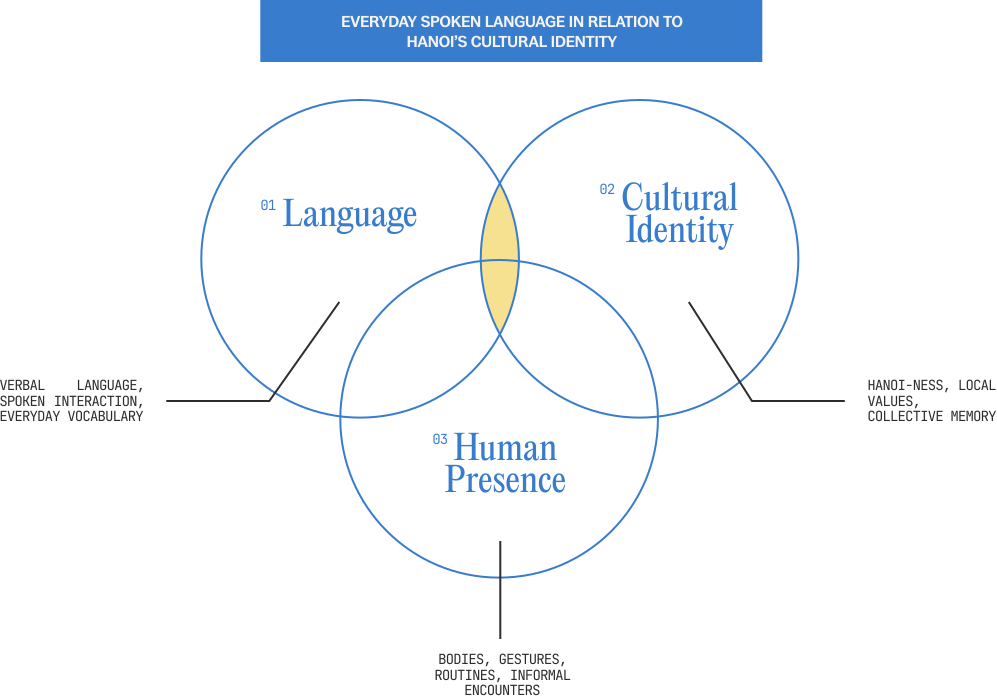
👩💻 I began by focusing on everyday spoken language as the first project direction. Because verbal interaction, tone, and everyday vocabulary repeatedly appeared as visible expressions of Hanoi’s cultural identity in sidewalk life.
This direction establishes the relationship between language and cultural identity, forming a baseline for later explorations into tourism and informal social interaction.
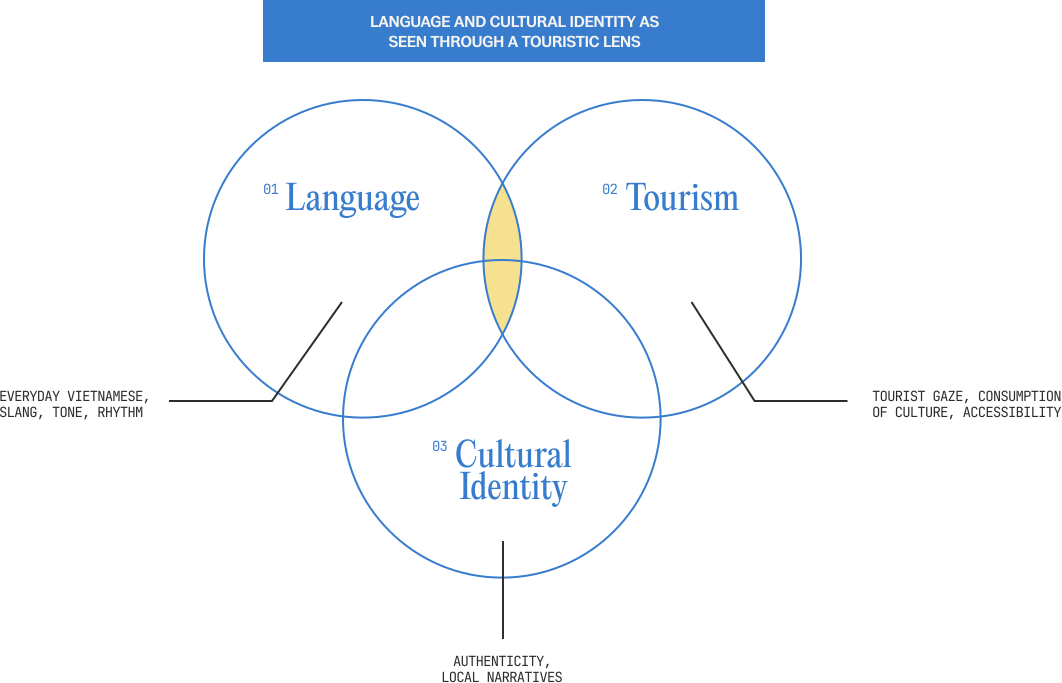
👩💻 I also extended the research towards tourism as a second project direction. Because everyday language repeatedly appeared through mediated and selective forms when viewed from an external perspective.
This direction examines how language and cultural identity are reframed, simplified, or fragmented when Hanoi’s sidewalk culture is encountered through touristic representation rather than lived interaction.
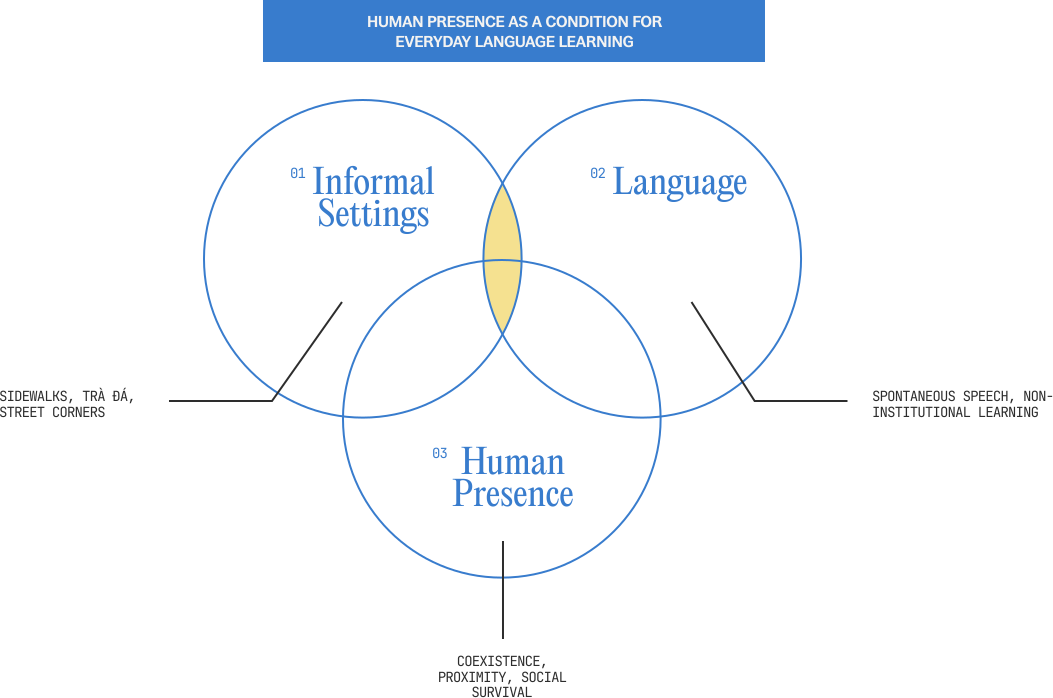
👩💻 I further narrowed my focus to human presence within informal settings as the third project direction. Because repeated observations showed that everyday proximity and coexistence play a key role in activating spontaneous language use.
This direction examines how language learning and communication emerge through direct human interaction in casual, non-institutional environments.
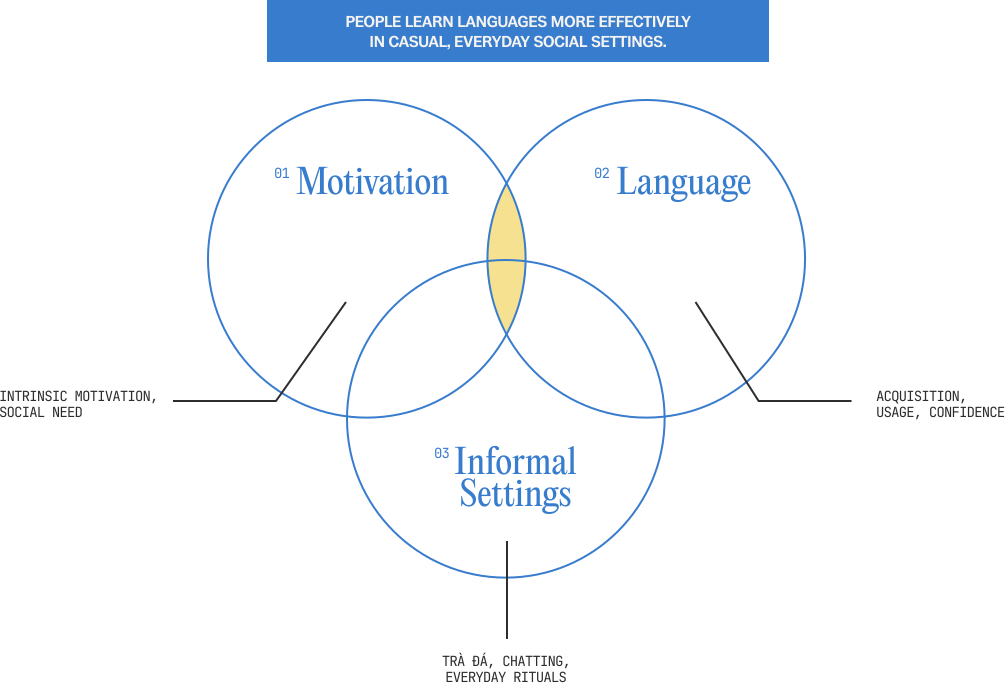
👩💻 I then further narrowed my focus towards informal, casual social settings. Because these environments repeatedly emerged as spaces where foreign language learning felt more natural and effective.
This became my fourth project direction, focusing on how everyday conversations and low-pressure interactions support language learning outside formal settings.
02
RESEARCH & ANALYSIS
I will now move into a more focused reading phase, reviewing each source according to the directions outlined above. For each theme, I will extract only the key insights that are most relevant, using them to strengthen and clarify the project’s core framework.
PROJECT DIRECTION #1
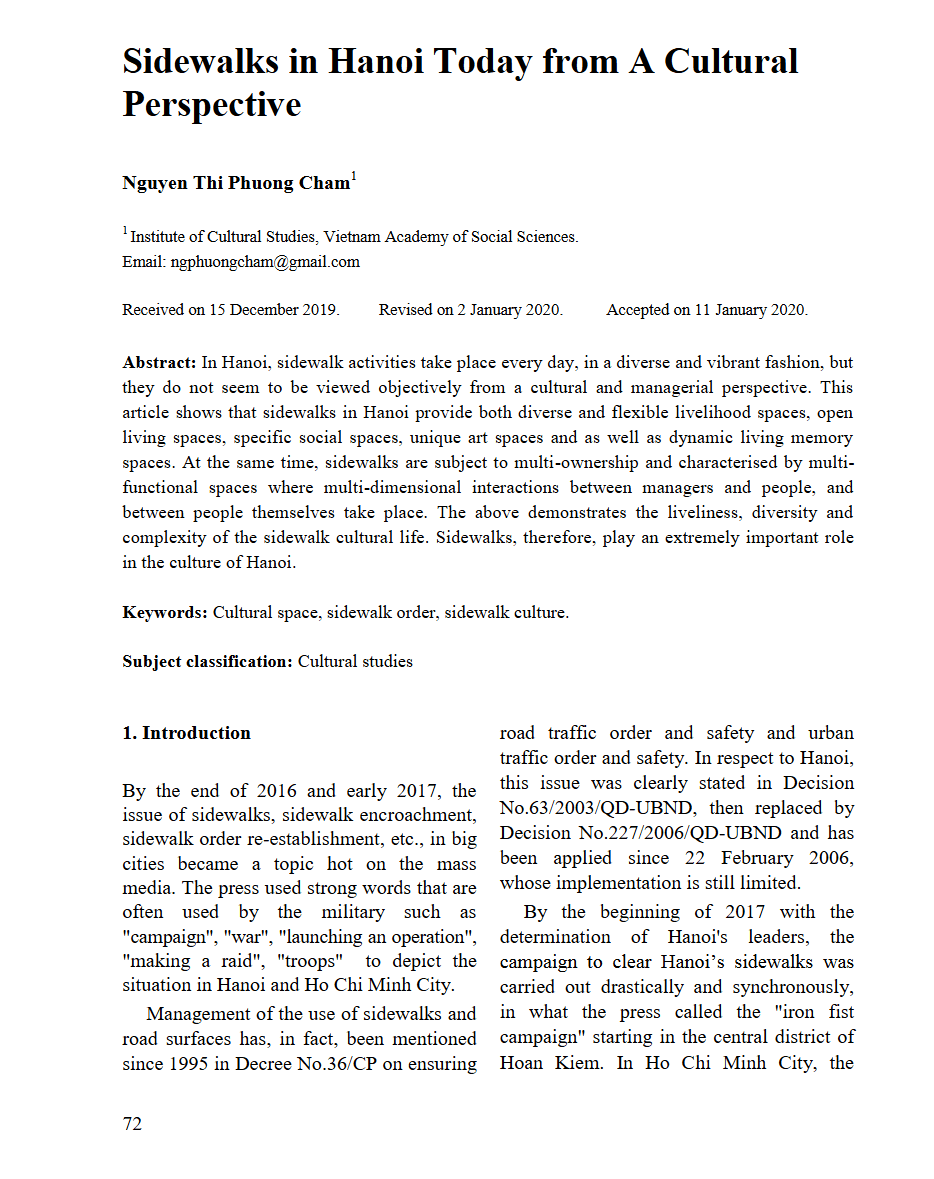
(Cham Nguyen, 2020)
Author
/Nguyen Thi Phuong Cham
Publication
/Vietnam Social Sciences (Vietnam Academy of Social Sciences)
Title
/The Role of Motivation in Adult Language Learning: A Mixed-Methods Approach
Type of material
/Academic journal article
*KEY INSIGHTS
Sidewalk culture operates as a layered everyday space where eating, trading, chatting, and gathering enable open and informal communication.
Repeated routines, greetings, and familiar street foods turn sidewalks into shared memory spaces tied to Hanoi’s identity.
Sidewalks function as social, economic, and cultural spaces that attract tourists seeking everyday local life and contribute new perspectives to the urban experience.
✍️ Sidewalk interactions act as an informal information network.
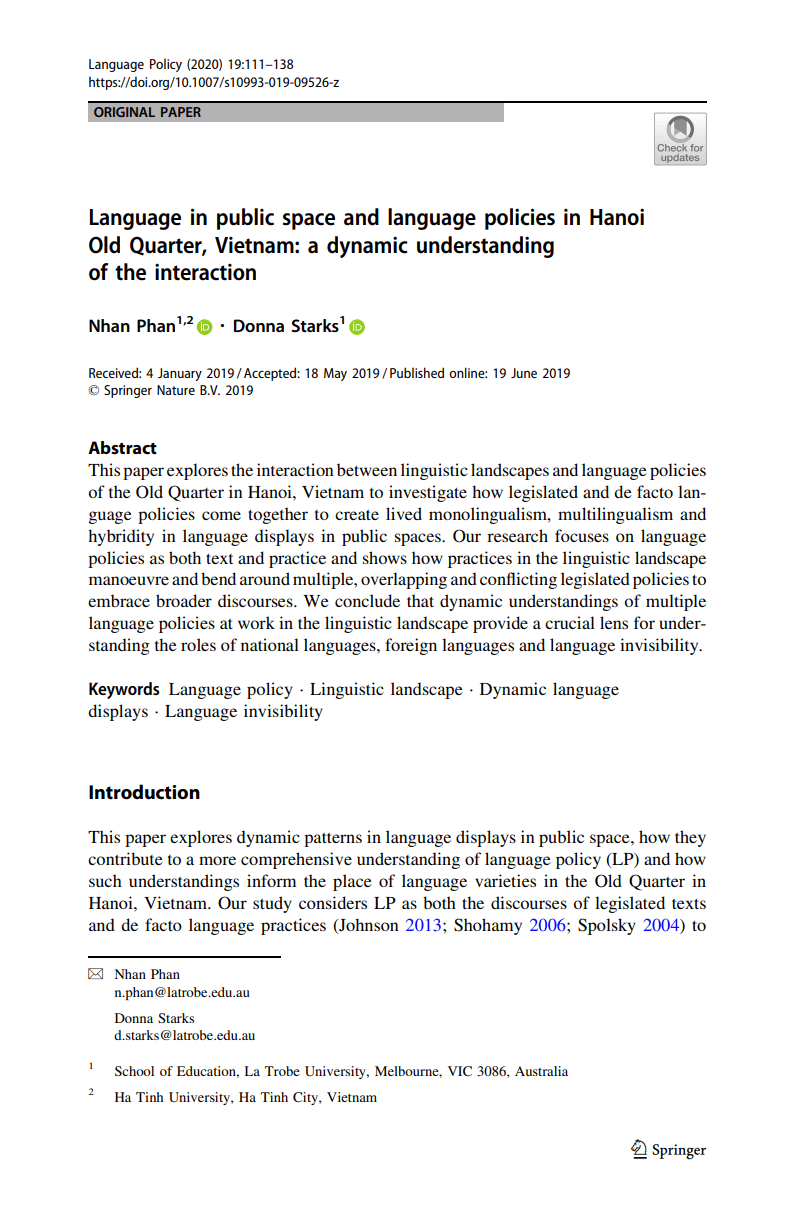
(Phan and Starks, 2019)
Author
/Phan, N. and Starks, D.
Publication
/Linguistic landscape / language policy journal (PDF circulated via Viet-studies)
Title
/Language in Public Space and Language Policies in Hanoi Old Quarter
Type of material
/Academic journal article
*KEY INSIGHTS
Explores Old Quarter signs and displays as a "linguistic landscape" blending Vietnamese, foreign languages, and hybrids (shaped by policy, tourism, and local initiative).
Argues real-world language use bends around overlapping rules, producing everyday monolingualism, multilingualism, and hybridity that mix national identity with global aspirations.
Treats signs as tools for commerce and tourism; streets act as a stage where language visibility decides who feels addressed (locals, domestic visitors, or foreigners).
✍️ It gives a solid lens for reading street-level Vietnamese/English signs alongside how vendors actually speak to locals versus outsiders.
(Phan and Starks, 2019)
Author
/Vu Thi Thanh Huong
Publication
/PhD dissertation, University of Toronto, Department of Anthropology
Title
/Politeness in Modern Vietnamese: A Sociolinguistic Study of a Hanoi Speech Community
Type of material
/Doctoral thesis (sociolinguistic ethnography)
*KEY INSIGHTS
Offers an in-depth description of native politeness concepts among Hanoi speakers, focusing on everyday spoken interaction instead of prescriptive grammar.
Analyses pronoun choice, kinship address, particles, and indirectness in routine conversation as practices that manage face, solidarity, and hierarchy in the Hanoi community.
Emphasises how situational cues (age, social distance, setting) shape real-time linguistic decisions, highlighting speech as a flexible cultural tool.
✍️ A real Hanoi speech, highlighting how everyday sidewalk interactions (food orders, bargaining, directions) brim with subtle politeness signs that embody the city's identity.
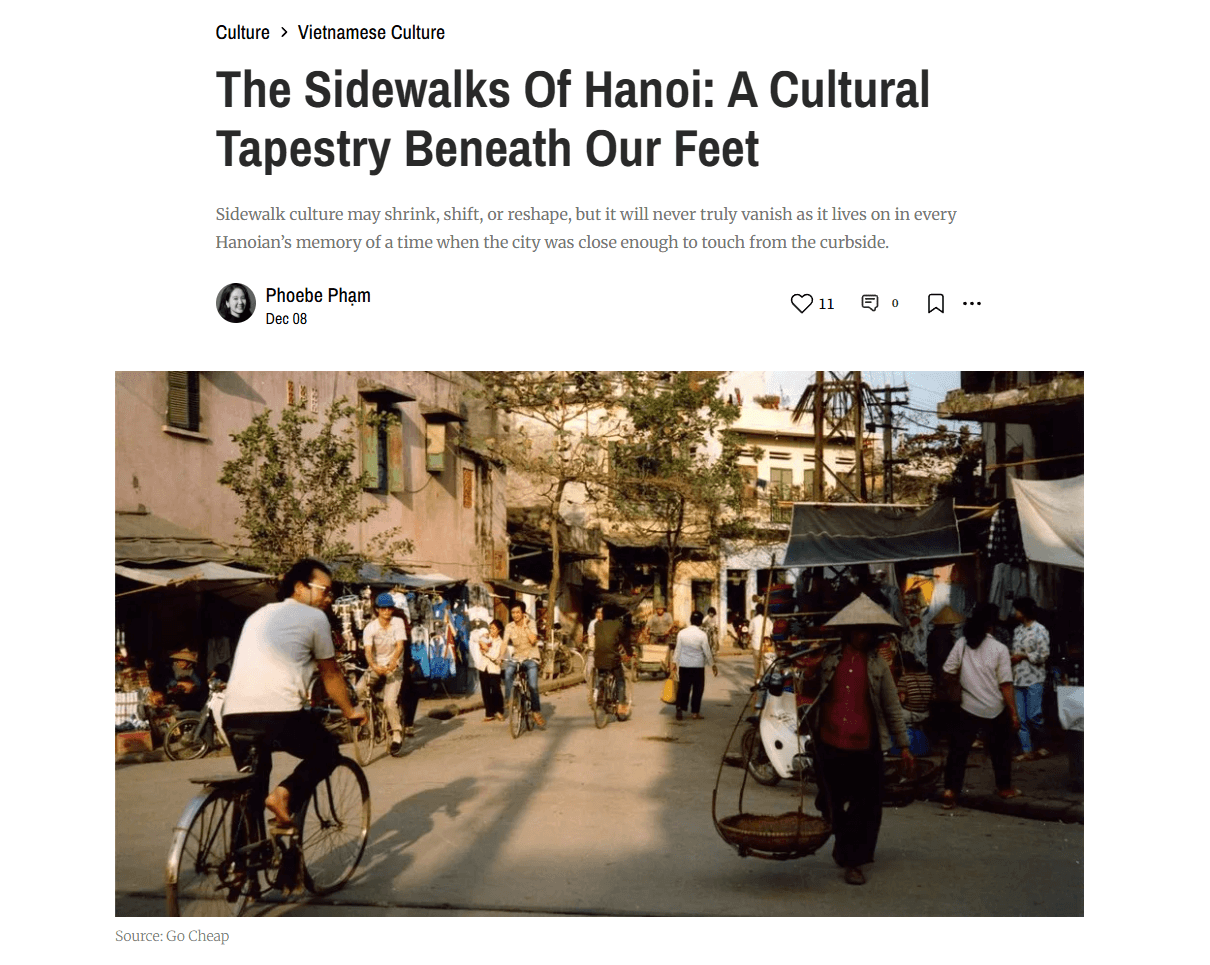
(Pham, 2025)
Author
/Phoebe Pham
Publication
/Vietcetera
Title
/The Sidewalks of Hanoi: A Cultural Tapestry Beneath Our Feet
Type of material
/Cultural essay
*Added as a follow-up source after W6
*KEY INSIGHTS
Assembles commentary from scholars like Nguyen Van Huy and Nguyen Thi Phuong Cham to describe sidewalks as “playgrounds, gossip corners, makeshift kitchens, and resting places” where people “share stories faster than newspapers.”
Emphasises that sidewalk gatherings for tea and chatting remain a habit rooted in rural social practices carried into the city by migrants, now seen as integral to Hanoi’s identity.
Frames sidewalk spaces as living memory and as central to Hanoi’s attractiveness for tourists who want to immerse themselves in “everyday life".
✍️ Translates academic ideas into an accessible narrative that links sidewalk talk and tea culture to Hanoi’s identity.
PROJECT DIRECTION #2
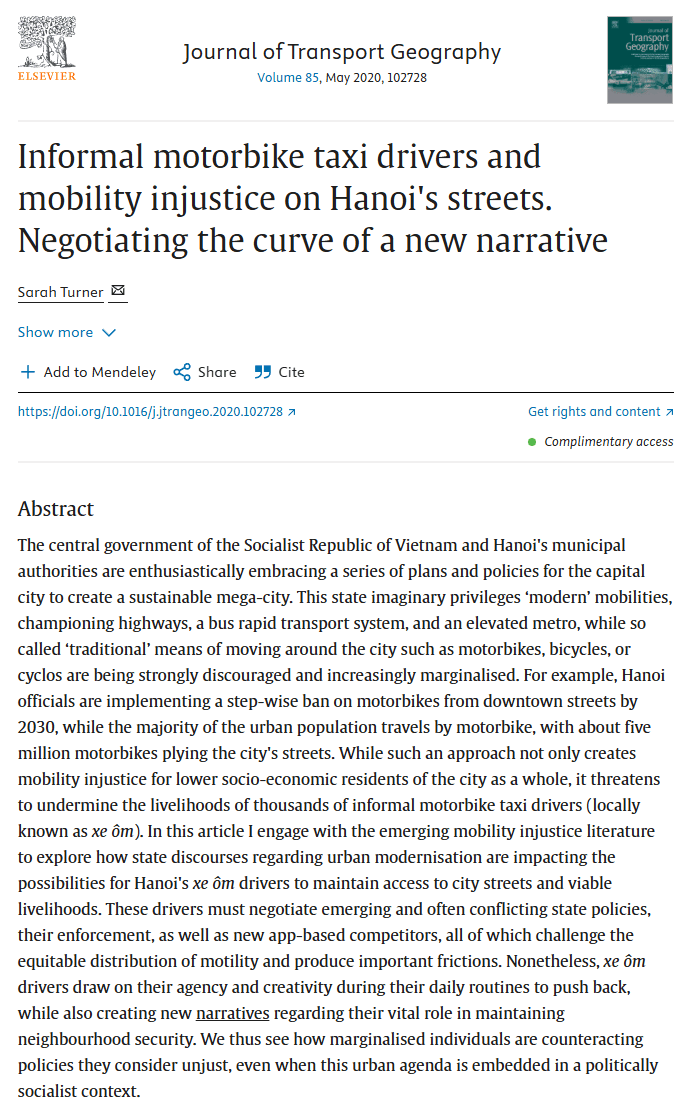
(Cham Nguyen, 2020)
Author
/Sarah Turner
Publication
/Journal of Transport Geography (Vol. 85)
Title
/Informal Motorbike Taxi Drivers and Mobility Injustice on Hanoi's Streets
Type of material
/Peer-reviewed journal article
*KEY INSIGHTS
Hanoi's streets, including sidewalks, host informal livelihoods like motorbike taxis that challenge official narratives, creating visual tensions between chaotic authenticity and sanitized tourist views.
Drivers negotiate mobility justice against policies, revealing how everyday human presence is marginalized in tourist representations favoring heritage over street labor.
This supports visual research by contrasting lived street negotiations with selective framing that simplifies urban culture for accessibility.
✍️ Sidewalk interactions act as an informal information network.
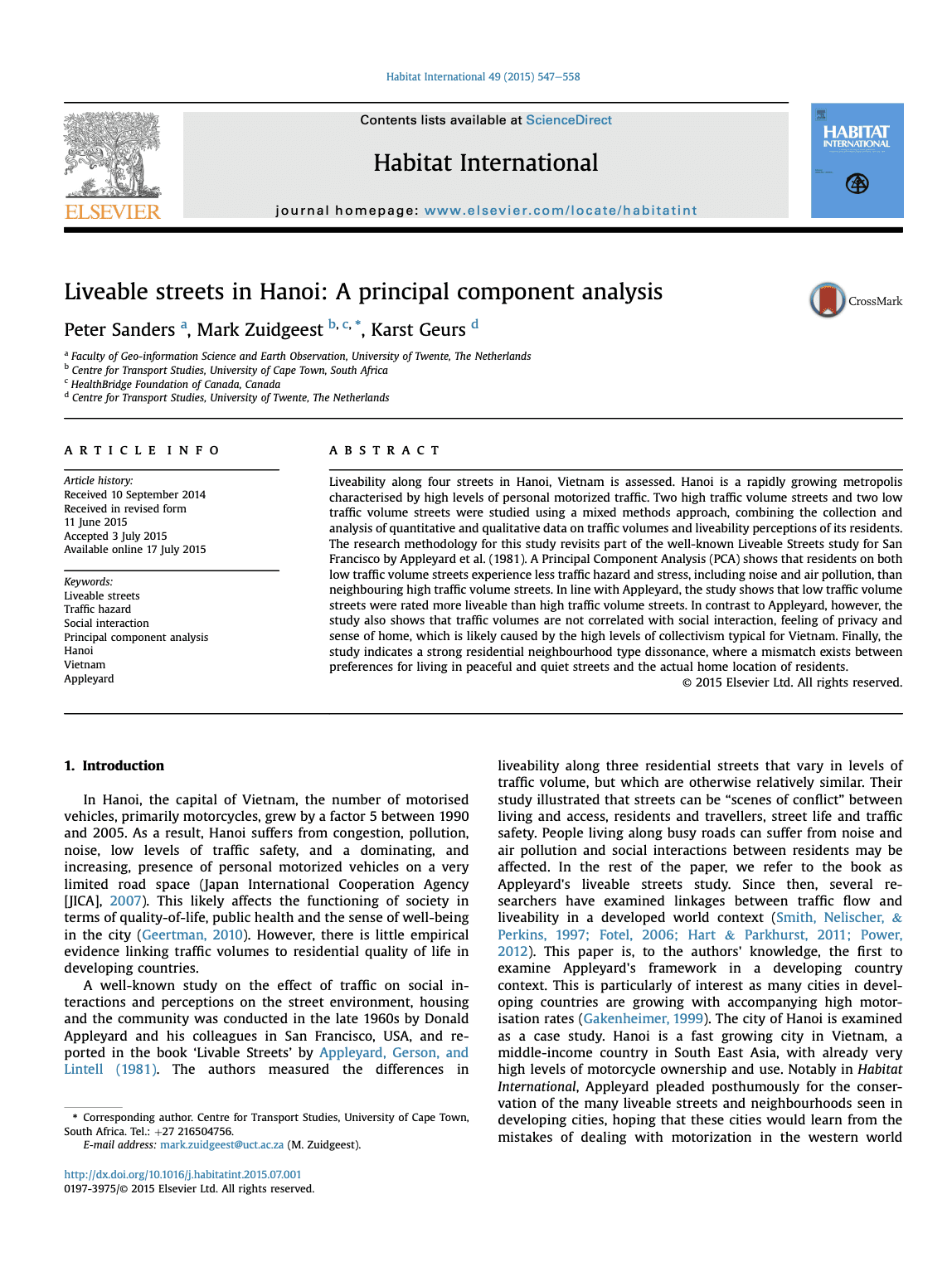
(Sanders et al, 2015)
Author
/P. Sanders et al.
Publication
/Habitat International (via UTWENTE repository)
Title
/Liveable Streets in Hanoi
Type of material
/Peer-reviewed journal article
*KEY INSIGHTS
Explores Old Quarter signs and displays as a "linguistic landscape" blending Vietnamese, foreign languages, and hybrids (shaped by policy, tourism, and local initiative).
Argues real-world language use bends around overlapping rules, producing everyday monolingualism, multilingualism, and hybridity that mix national identity with global aspirations.
Treats signs as tools for commerce and tourism; streets act as a stage where language visibility decides who feels addressed (locals, domestic visitors, or foreigners).
✍️ It gives a solid lens for reading street-level Vietnamese/English signs alongside how vendors actually speak to locals versus outsiders.
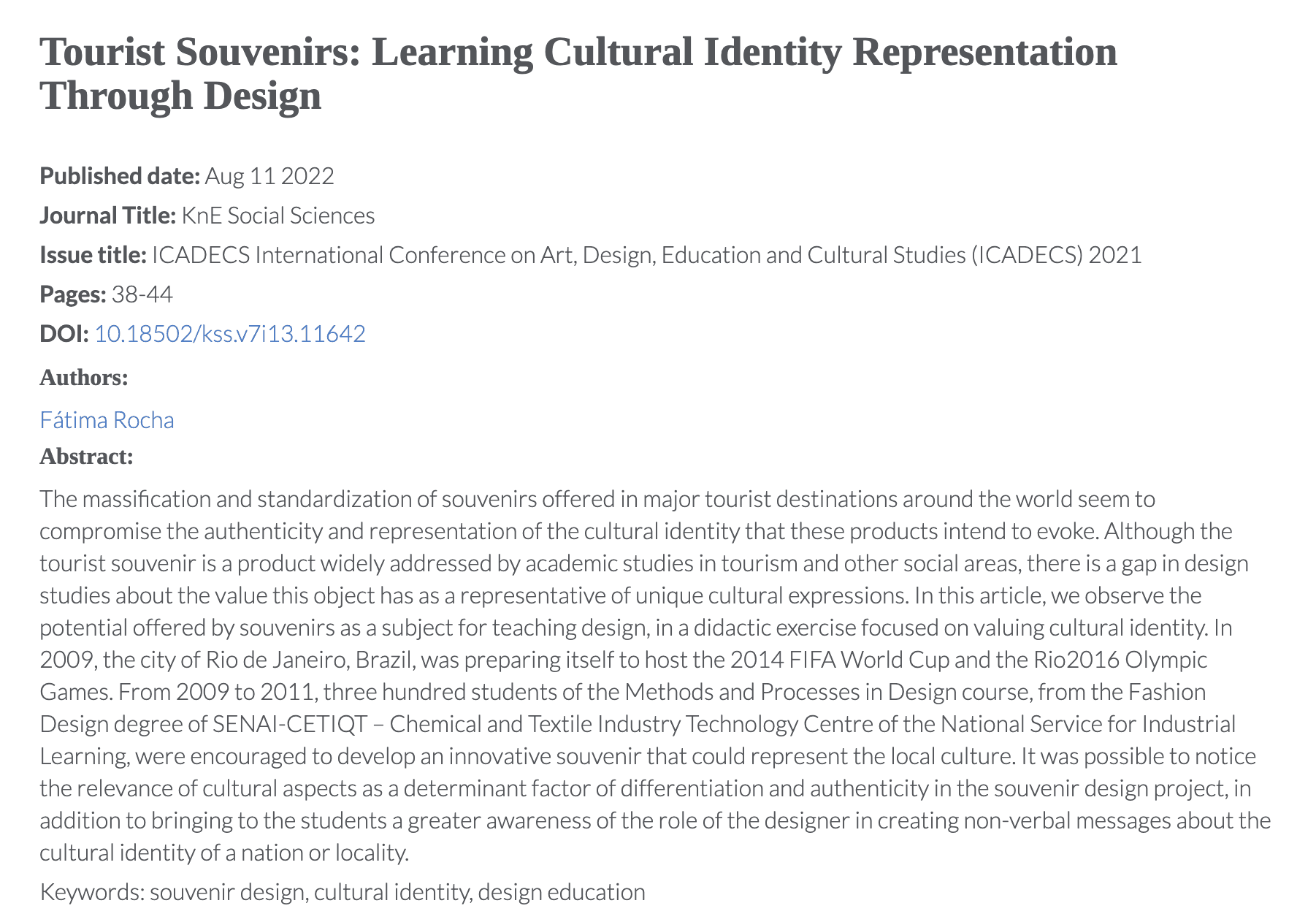
(Rocha, 2022)
Author
/Fátima Rocha
Publication
/KnE-Social Sciences
Title
/Tourist Souvenirs: Learning Cultural Identity Representation Through Design
Type of material
/Academic conference paper
*KEY INSIGHTS
Souvenirs aestheticize local culture, compromising authenticity in mass tourism, paralleling Hanoi's sidewalk simplification for visual appeal.
Design education highlights cultural mediation, useful for critiquing tourist visuals that frame everyday elements like street signs selectively.
✍️ Reveals tensions in representing urban identity, applicable to Vietnam's sidewalk gaps.
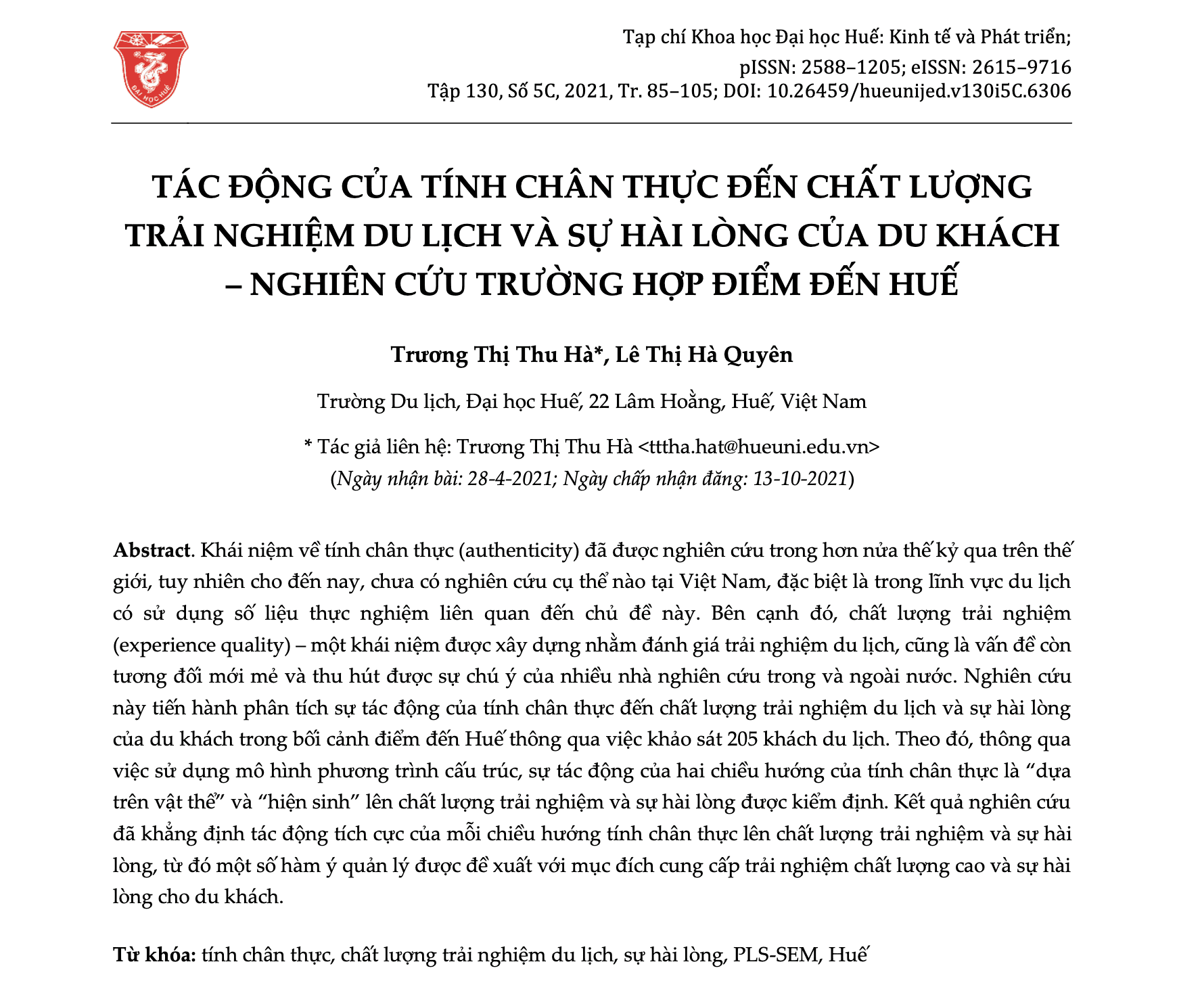
(Thu and Thi, 2021)
Author
/Truong Thi Thu Ha, Le Thi Ha Quyen
Publication
/Hue University Journal
Title
/Impacts of Authenticity on Tourists' Experience Quality
Type of material
/Peer-reviewed journal article
*KEY INSIGHTS
Object-based and existential authenticity dimensions enhance tourist satisfaction but reveal selective framing of cultural heritage, mirroring Hanoi's sidewalk tensions.
Empirical data shows tourists seek high-quality authentic experiences, yet mediation simplifies lived culture for accessibility.
✍️ Provides conceptual evidence for visual research on Vietnam's urban authenticity gaps.
PROJECT DIRECTION #3
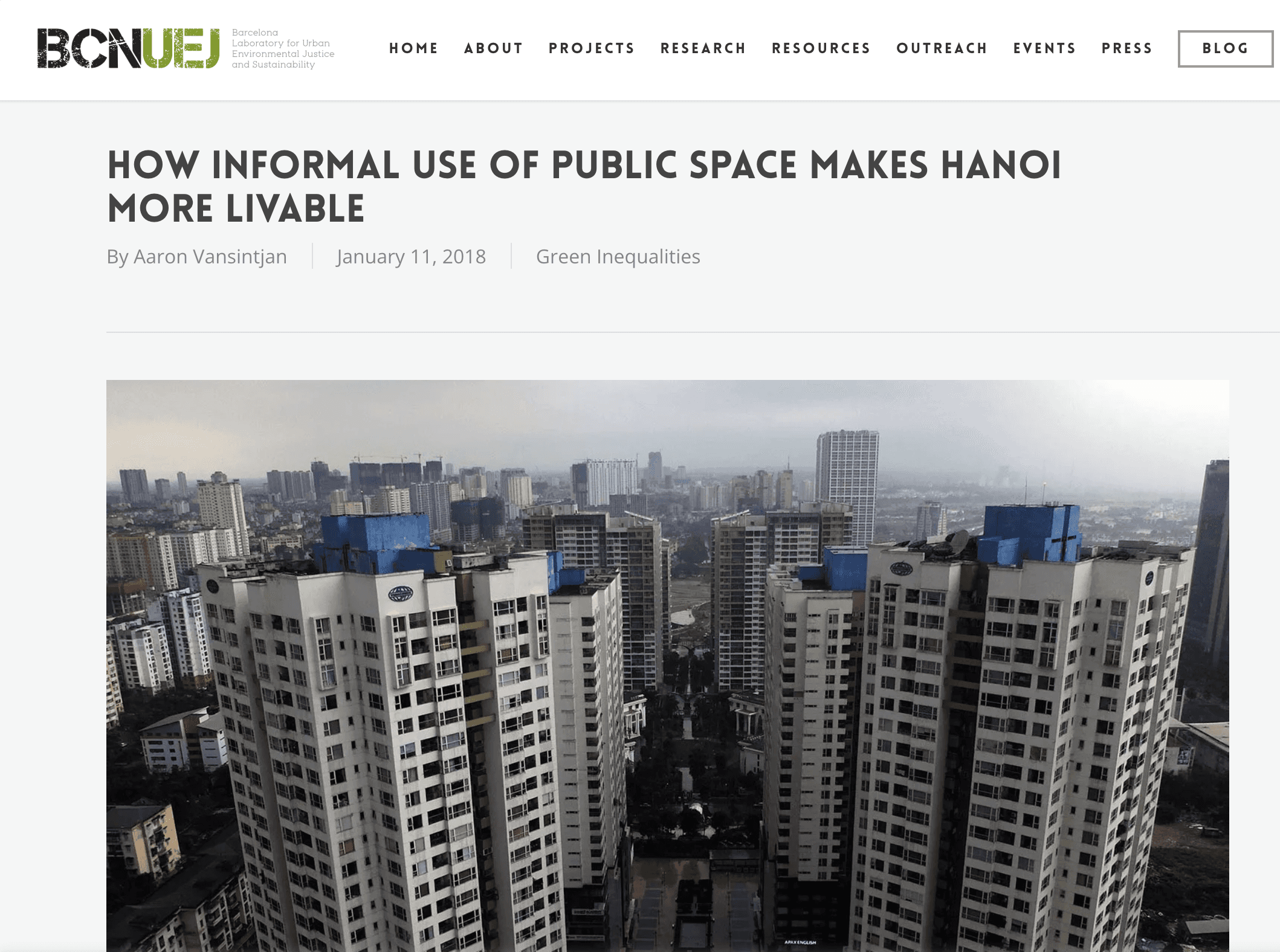
(Vansintjan, 2018)
Author
/Aaron Vansintjan
Publication
/BCNUEJ urban research
Title
/How Informal Use of Public Space Makes Hanoi More Livable
Type of material
/Urban case study
*KEY INSIGHTS
Sidewalk stalls by low-income residents form safety nets, where routines like food sales enable community connections via embodied exchanges.
Informal vending turns public spaces into hubs for social interaction, supporting survival learning through repetition and proximity.
✍️ Sidewalk routines create everyday.
(Chi, L. Q. et al, 2018)
Author
/Le Quynh Chi, Nguyen Thanh Tu
Publication
/Journal of Science and Technology in Civil Engineering
Title
/Street in Hanoi Ancient Quarter as Cultural Place: A Case Study of Hang Buom Street
Type of material
/Academic journal article
*KEY INSIGHTS
Sidewalks blend movement/non-movement activities, with spatial extensions enabling gesture-based social relations.
Guild streets historically substituted public plazas, fostering routine interactions as adaptive communication.
✍️ Hanoi’s historic streets act as informal public spaces where routine gestures and encounters sustain everyday social communication.
PROJECT DIRECTION #4
(Luo et al., 2023)
Author
/Luo, M., Lu, Z., Song, H. and Zou, Z.
Publication
/Canadian Center of Science and Education
Title
/Dynamic Perceptions in Learning Vietnamese: A Case Study of Vietnamese Majors at a Chinese University
Type of material
/Journal article
*KEY INSIGHTS
Learners mobilize social-cultural resources in informal settings to overcome challenges and shape belonging.
Language use in everyday exchanges builds confidence and identity amid socioeconomic ties between Vietnam-China.
Motivation stems from practical social needs.
✍️ Demonstrates emergent learning through cross-cultural informal interactions.
Chi, N. (2024)
Author
/Nguyen Chi
Publication
/VnExpress International
Title
/Hanoi Sidewalk Tea's Spirit of the Streets
Type of material
/Urban cultural study
*KEY INSIGHTS
Sidewalk tea stalls hub community chats across ages/classes, turning rituals into belonging spaces.
Repeated encounters with vendors/students build relational language skills organically.
Elderly and youth use them for nostalgic social survival.
✍️ Illustrates Vietnam's urban tea rituals as confidence-building sites for non-curricular language use.
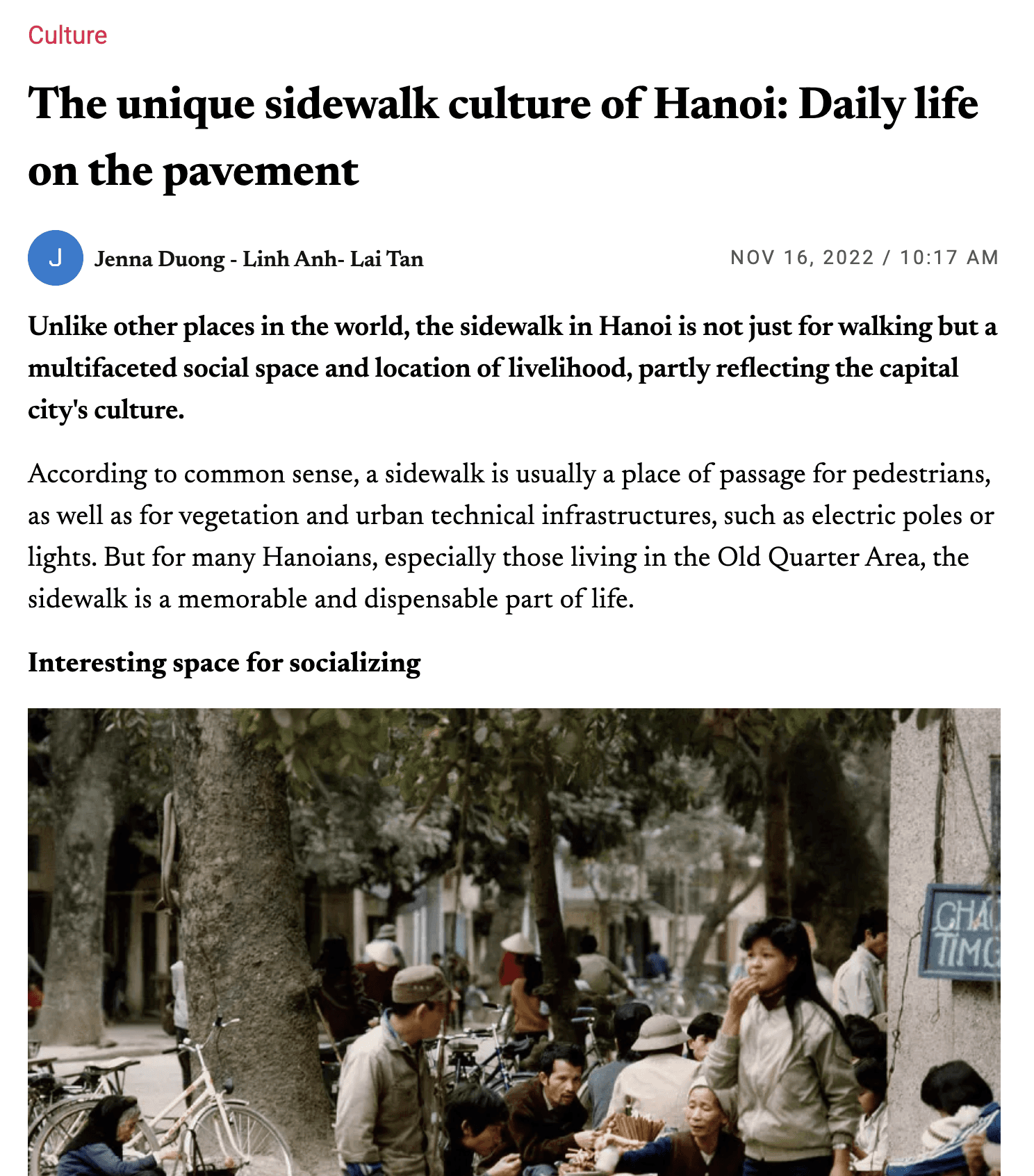
Title
/The Unique Sidewalk Culture of Hanoi: Daily Life on the Pavement
Type of material
/Article
*KEY INSIGHTS
Sidewalks host tea/chatting as ingrained habits from rural roots, driving informal social cohesion.
Gatherings reinforce belonging via light-hearted, repeated language exchanges.
✍️ Frames Hanoi's street culture as a socially driven learning arena for adults.
RESULT & REFLECTION
After the reading session, I felt that most of the project directions were closely related and difficult to distinguish. I therefore evaluated each direction individually in order to make a clearer decision about which ones to take forward for the upcoming proposal.
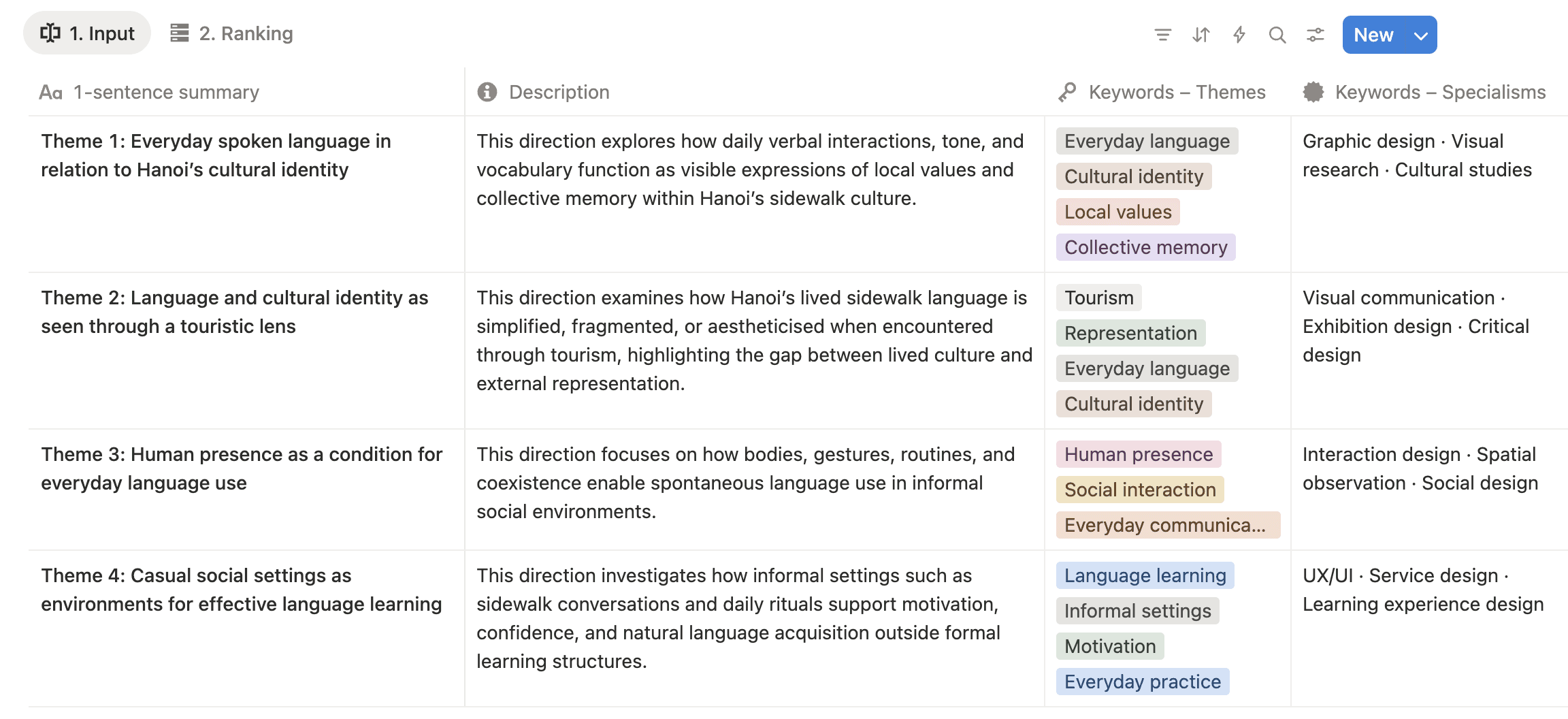
👩💻 Step 1: Fill in the table.
At this stage, I organised all four project directions into a table to clearly compare their focus and development potential. By outlining summaries, keywords, and relevant areas, I was able to see how each direction functioned within the project and prepare for the next step of evaluation and narrowing down.
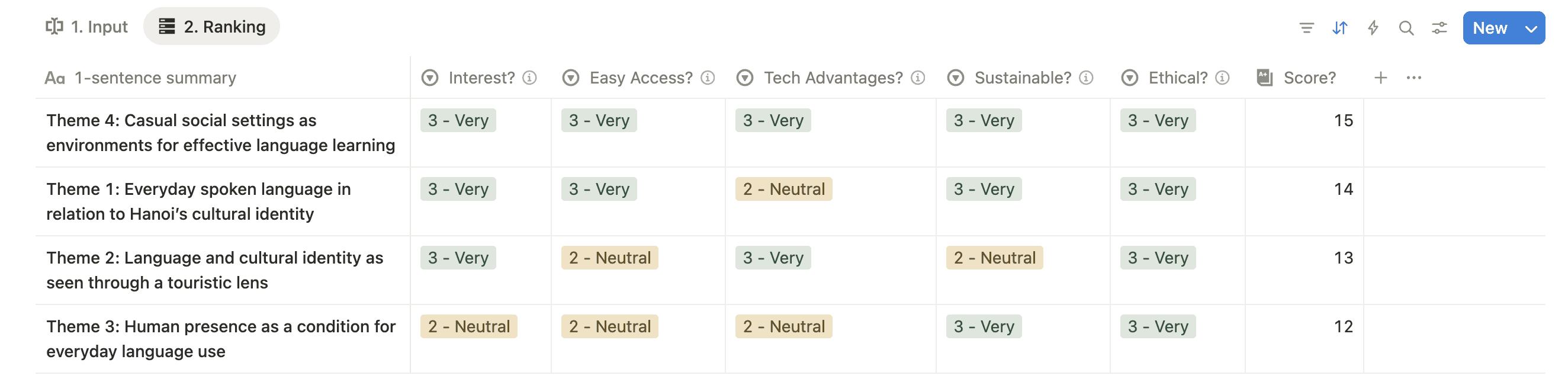
👩💻 Step 2: Ranking
In this step, I ranked the four project directions based on their clarity, relevance, and development potential. This comparison helped me decide which directions should be taken forward as core themes and which should remain as supporting or contextual layers.
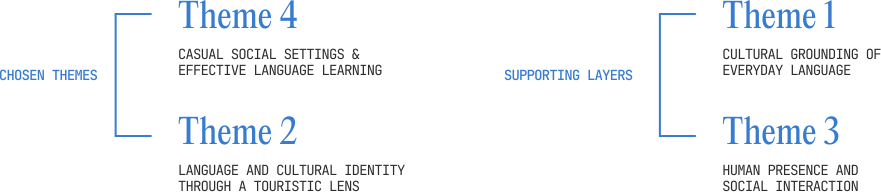
👩💻 Step 3: Narrowing down
Based on the ranking outcomes in Step 2, I narrowed the project from four initial directions to two core themes. While all directions contributed to my understanding of language, culture, and everyday life on Hanoi’s sidewalks, not all demonstrated equal potential to function as the main drivers of the project.
03
PRACTICES & DEVELOPMENT
After gaining more clarity in my project directions, I began conducting additional case studies that explore the relationship between cultural identity and language through typographic construction. These cases were used as visual research to investigate how typography can be carved, adapted, and embedded with cultural meaning, helping me imagine potential visual outcomes for the project.
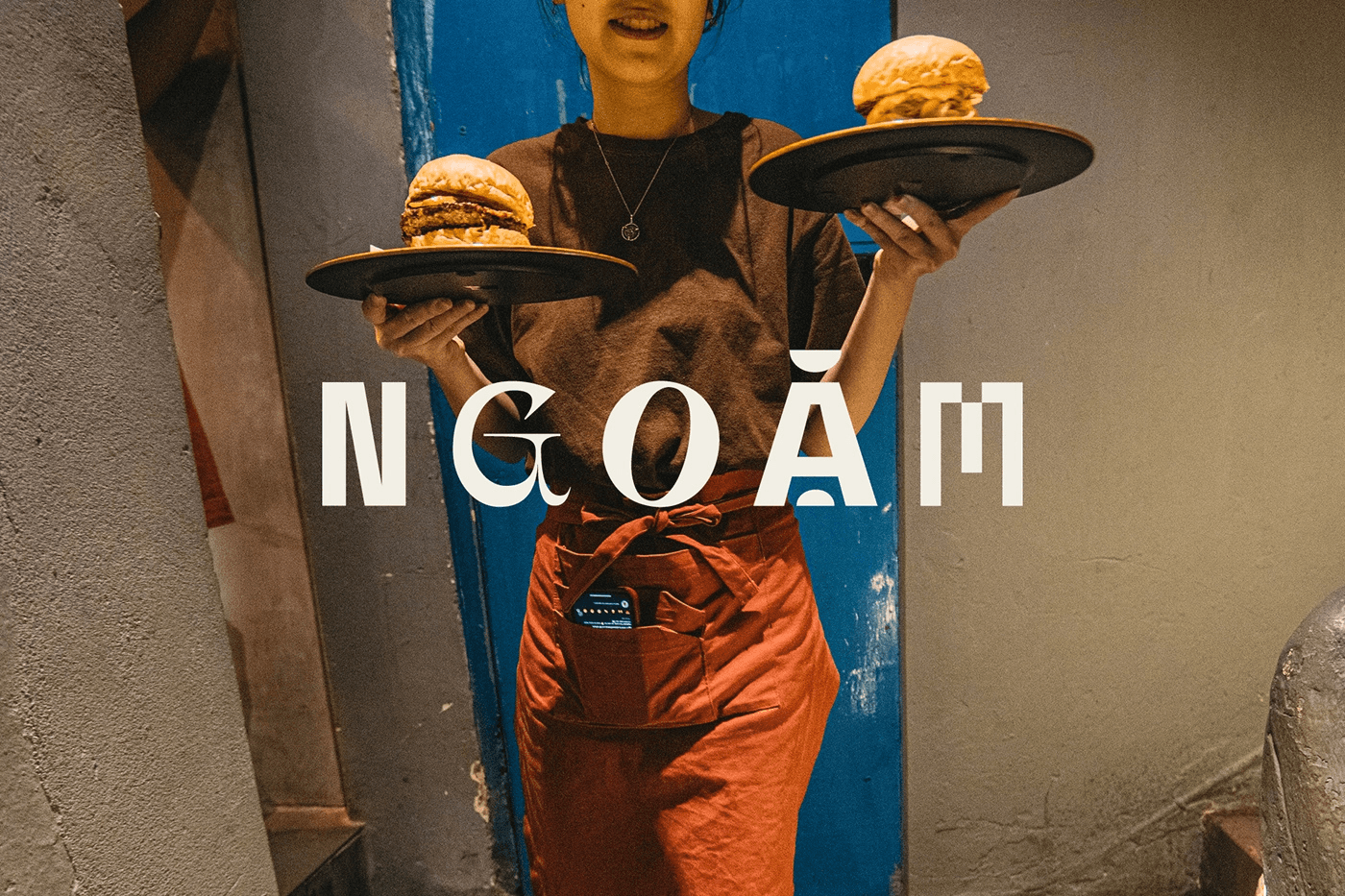
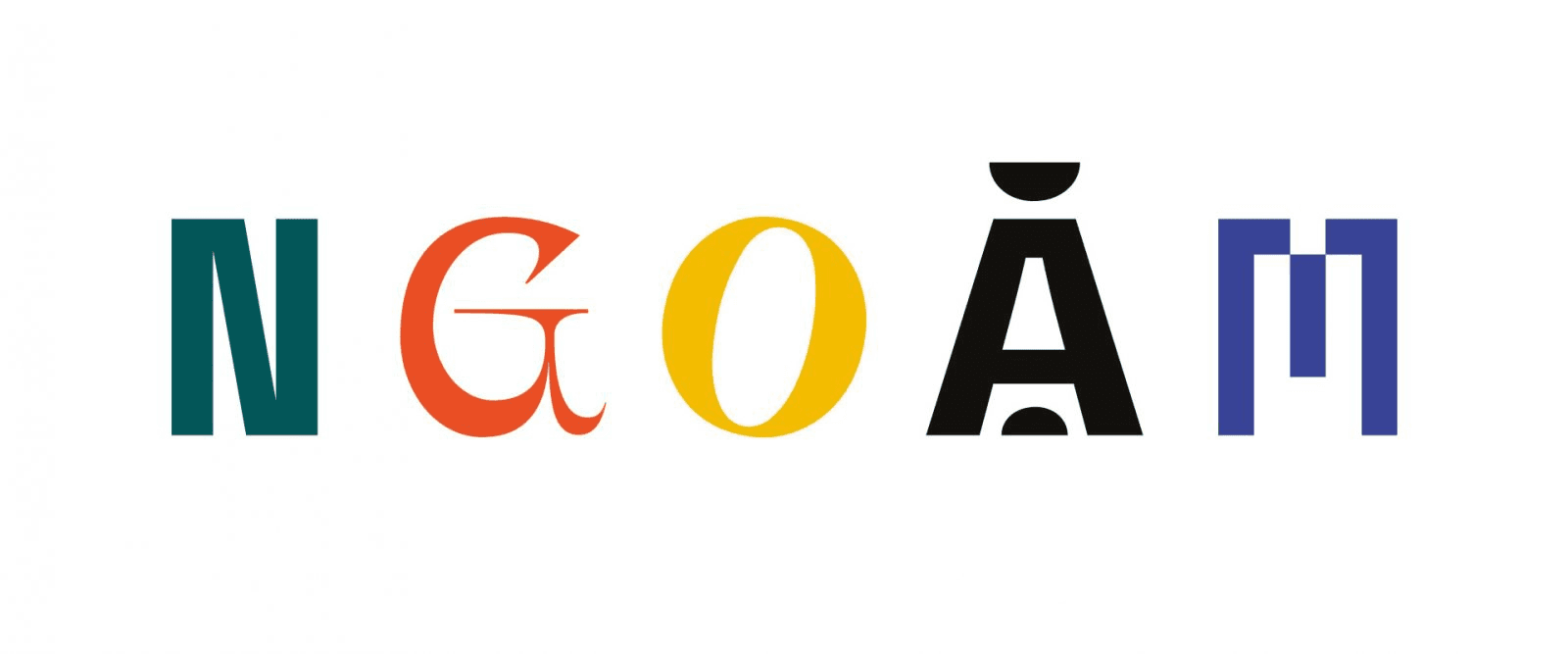
Source
/RGB.vn - “NGOAM: Hoa quyen ban sac van hoa doc dao trong thiet ke thuong hieu am thuc Viet (Studio Cohe)
/'NGOAM' Brand Identity by Studio Cohe (Behance)
Keywords
/F&B industry
/visual identity
/branding
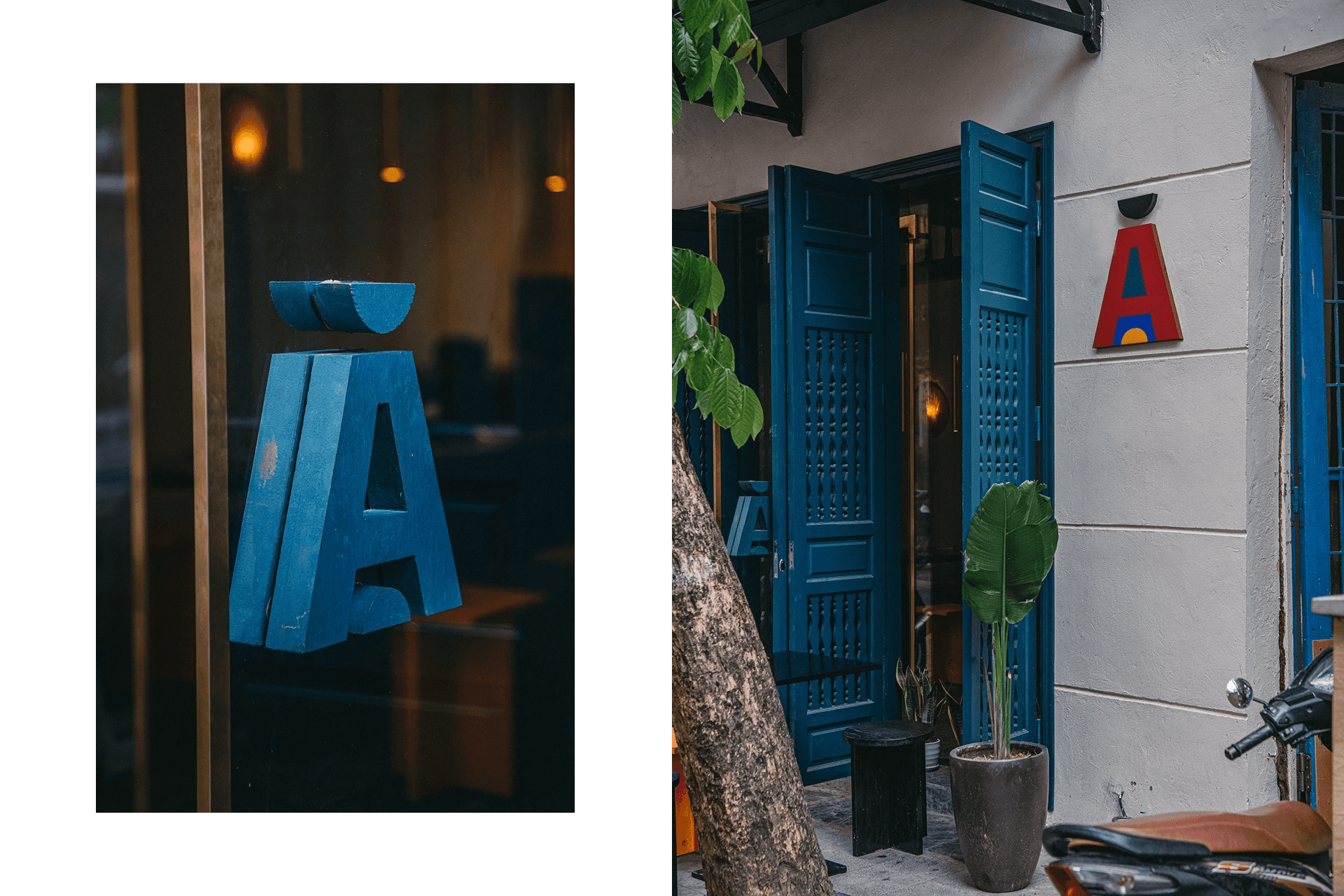
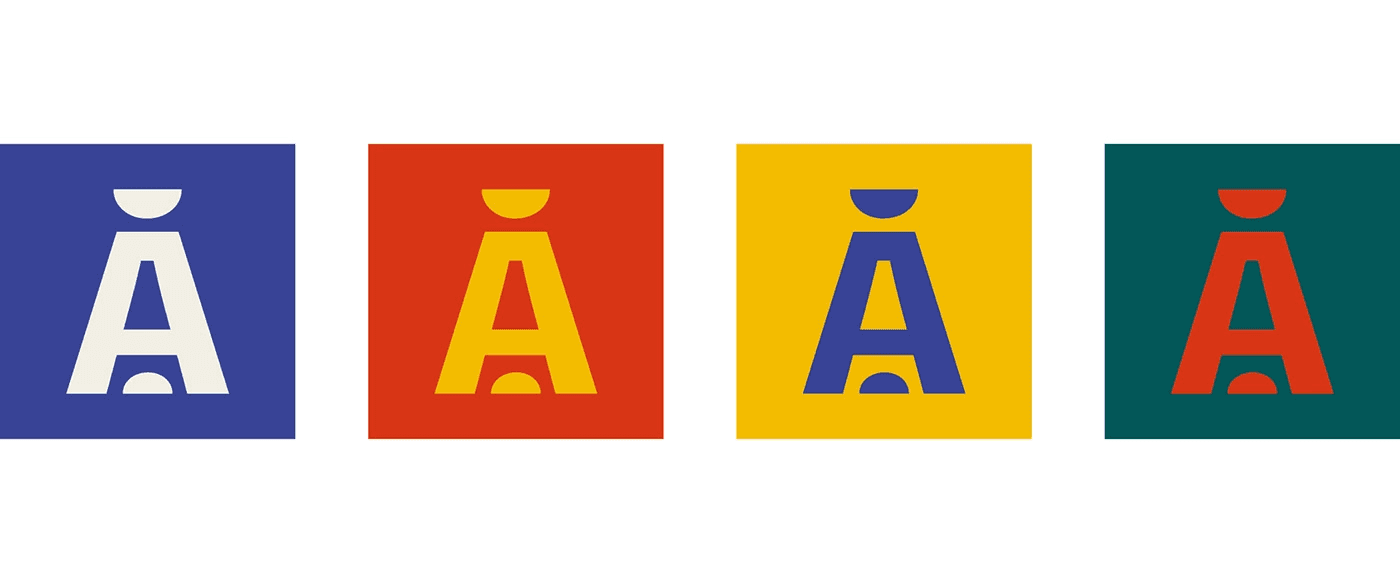
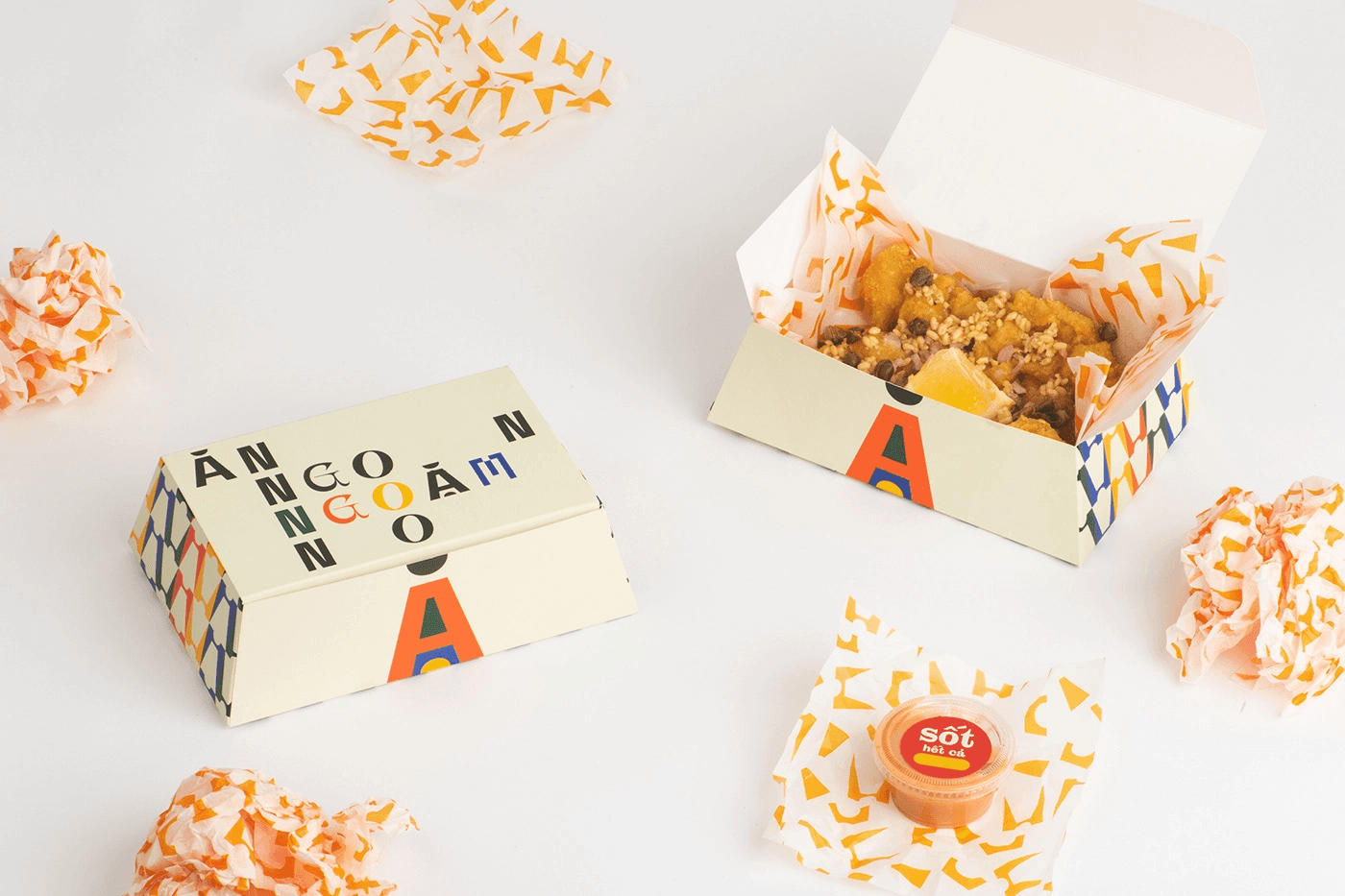
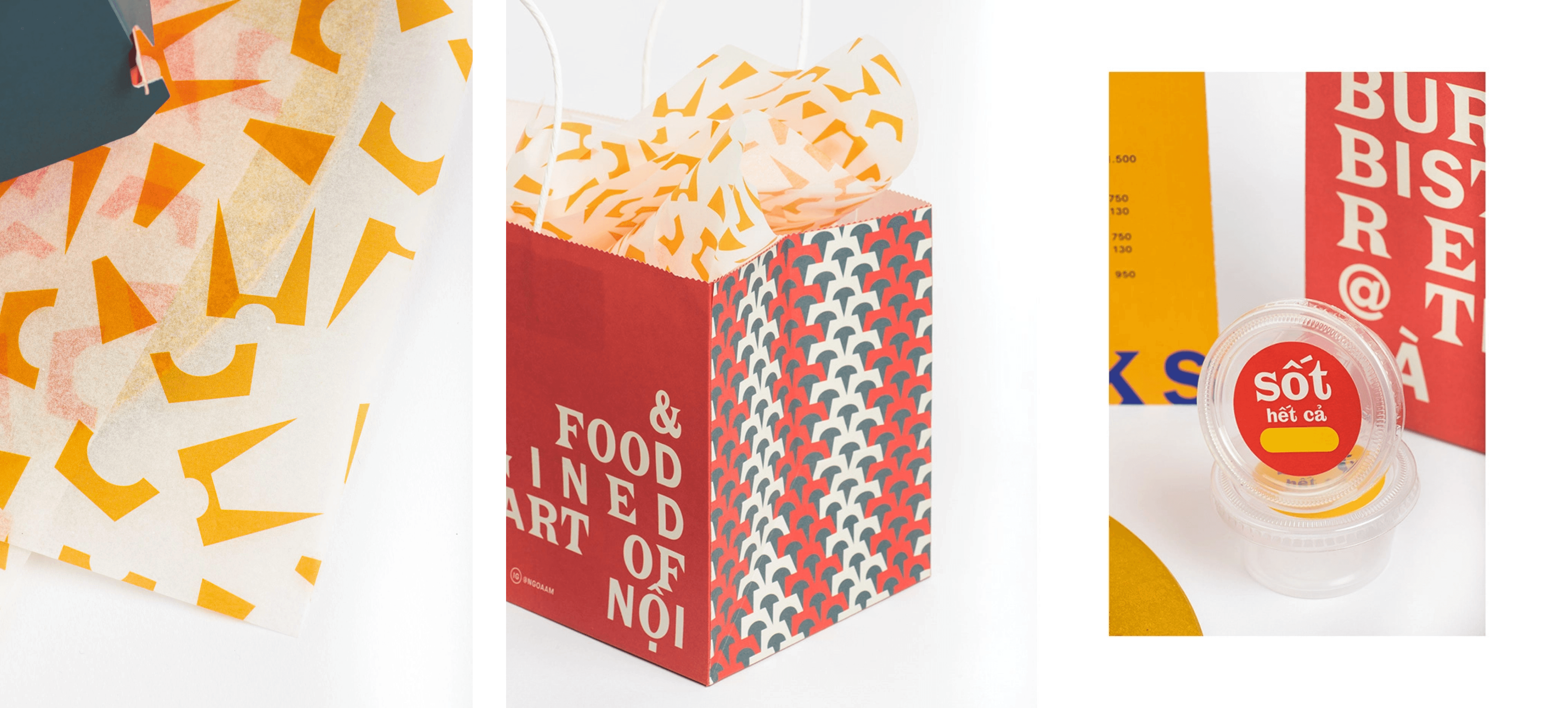
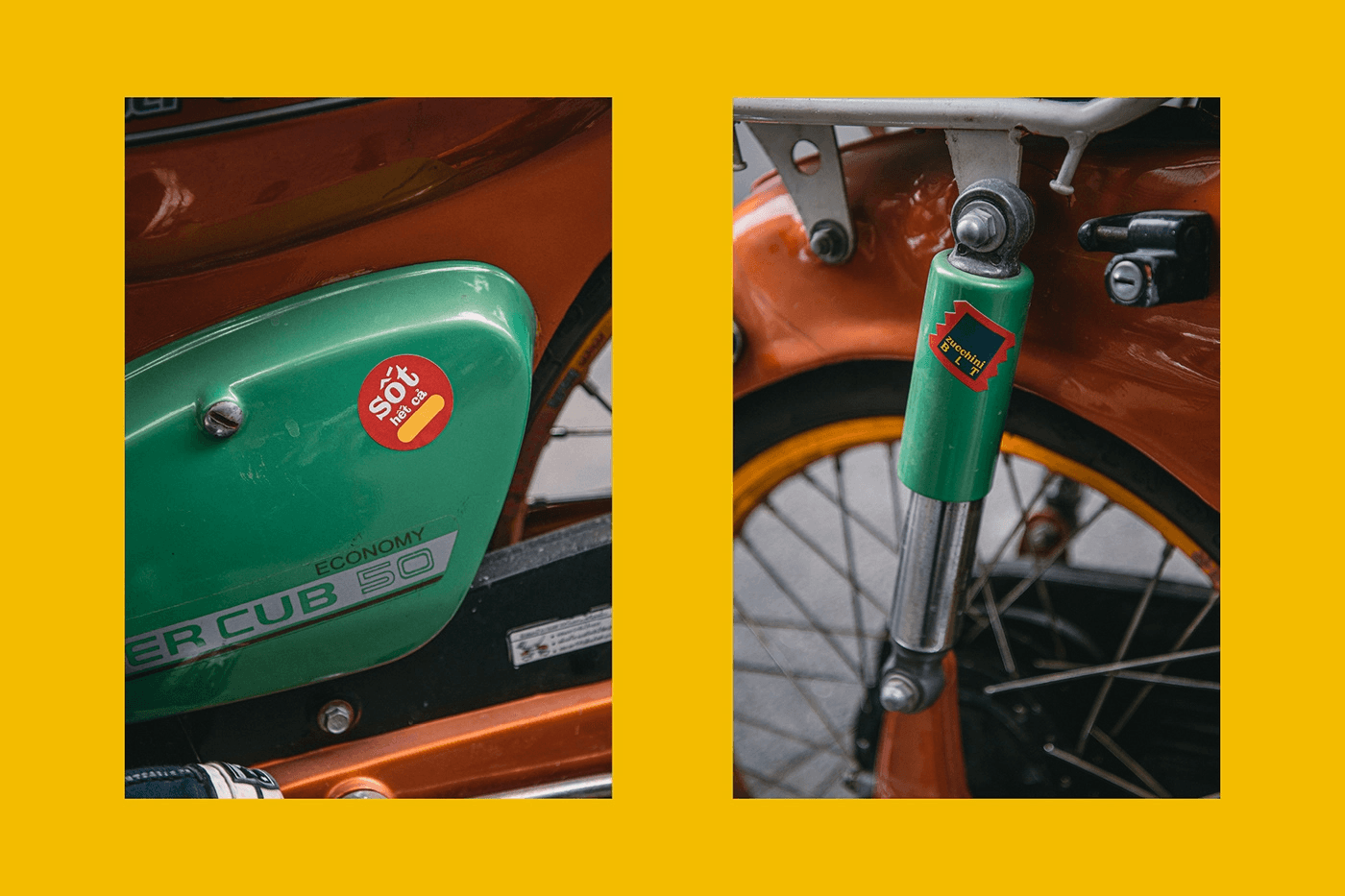
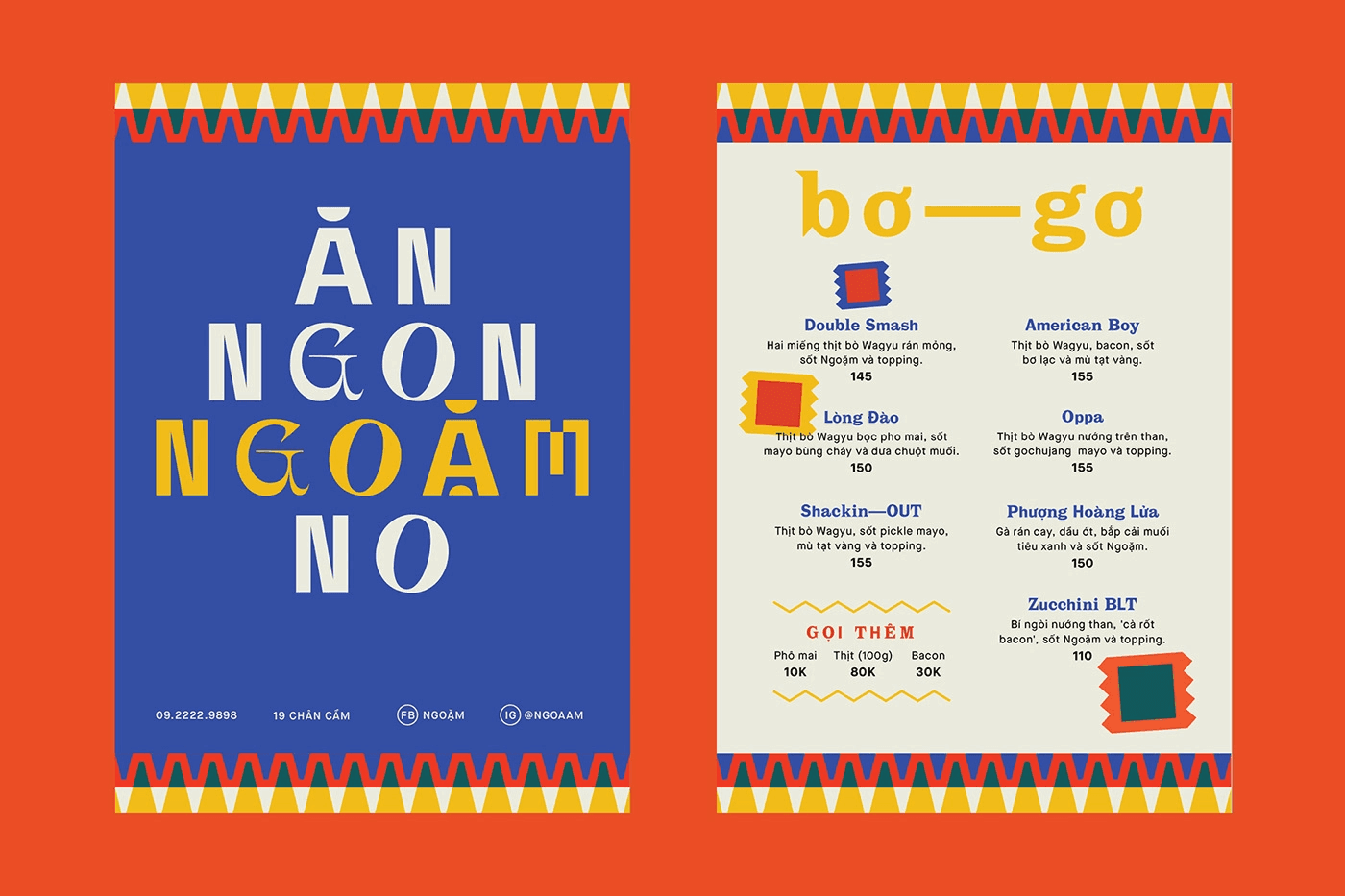
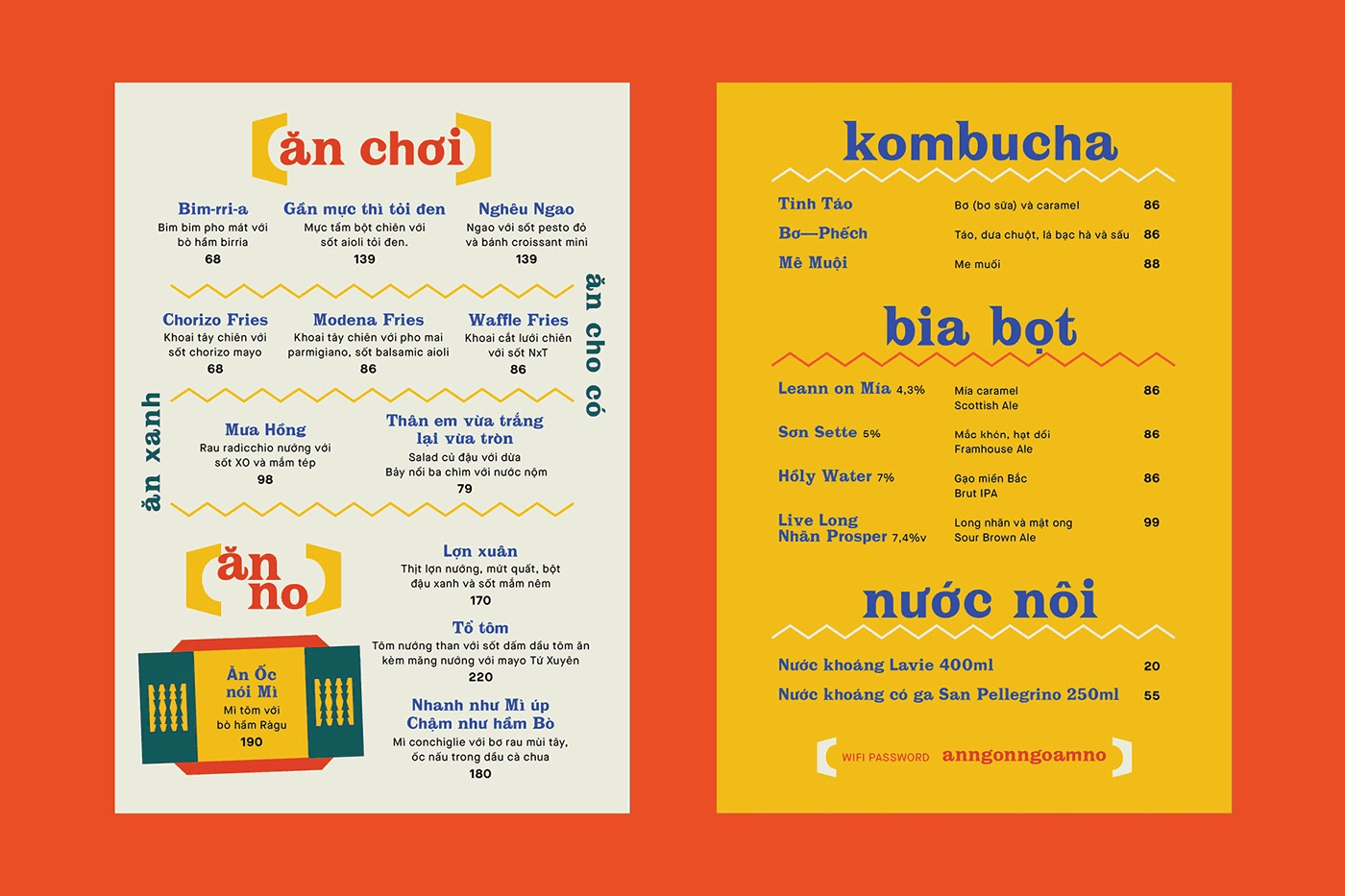
This brand identity reframes NGOAM from a niche burger startup into a cultural “meeting point” where Vietnamese flavours from different regions are curated into a bistro-style experience. The system uses playful ransom-type lettering, a customised “Ặ” and anagram-based wordplay to make language part of the brand voice, while the colour palette draws from traditional festival flags and the graphic patterns are built from reused letterform offcuts to echo a zero-waste mindset.
*CORE IDEA
The NGOAM branding concept intentionally fuses diverse cultural elements to reflect the unique experience and identity of the restaurant. Designers reconstructed the brand story into a cohesive visual narrative that highlights cultural diversity and blends traditional and contemporary references.
✍️ Combines cultural interpretation with design storytelling.
*DESIGN INTENT
Celebrate Vietnamese cultural diversity through visual identity.
Translate food and community values into visual language and brand experience.
✍️ Uses everyday culture as design material.

*COLOR CHOICE
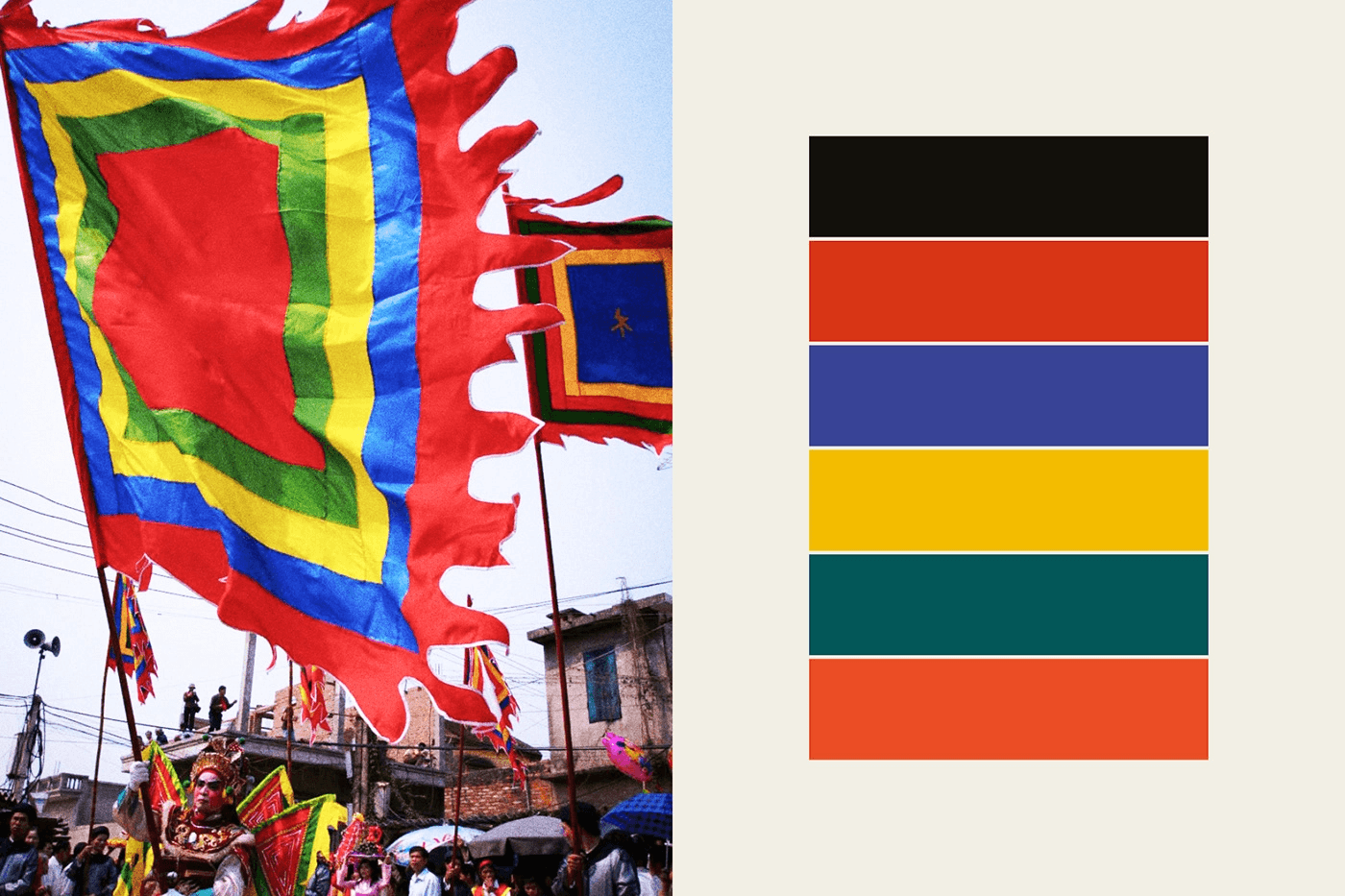
One of NGOAM key visual is the cờ hội (five-color flag), a cultural staple in Vietnamese traditional festivals. To NGOAM, every burger is a celebration. Naturally, we integrated the flag’s vibrant tones into the color palette.
✍️ Colour functions as a cultural signifier rooted in lived experience.
*GRAPHIC SYSTEM
Inspired by the brand’s recycling food scraps into new ingredients, the pattern can be built from the negative space cut-outs of the icon. This gives flexibility to the graphic asset as there is no limit or any set rules to the amalgamation. Zero-waste FTW.
✍️ The design system behaves like lived culture: modular, reused, and continuously reassembled.
RESULT & REFLECTION
From the case studies, I observed that colour and typographic wordplay offer strong potential for expressing Hanoi’s cultural identity. When applied to language learning, these elements become more engaging and easier to connect with on an everyday level.