01
PLANNING
Because classes were paused this week due to the storm, I used the time to focus on generating initial ideas for my FMP.
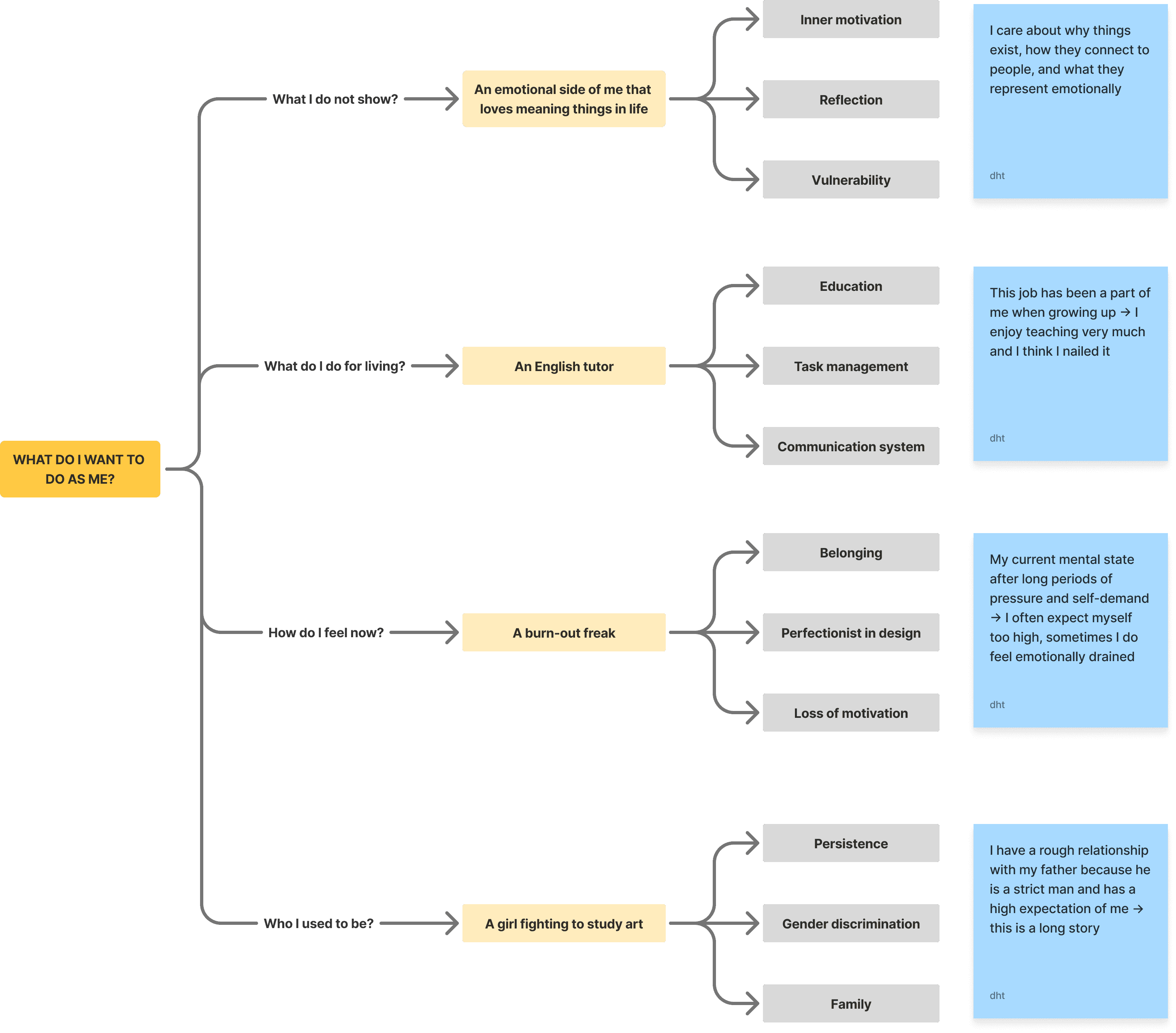
I explored different directions through quick brainstorming , using rough sketches and mind-maps to test what topics felt most relevant to me.
RESULT & REFLECTION
Most of them felt very familiar to me, but overall, they still appeared quite abstract, so I realised I needed to work on them a little further.
02
RESEARCH & ANALYSIS
To narrow down the final set of themes for the next stage, I collected a small number of academic and practice-based readings, focusing specifically on frameworks used for theme ideation and analysis.
👩💻 From here, I started analysing the overlaps between my initial themes by testing them against different frameworks. I focused on identifying which concerns repeatedly appeared across multiple framework.
I explored how each framework functioned in the ideation process, such as helping to clarify context, reveal underlying structures, or assess whether a theme could be developed beyond an initial idea, which allowed the themes to be narrowed down in a more logical, evidence-based way.
READING MATERIALS
Framework source
/UXMock
Type of framework
/5W1H Problem-framing Model
Field of use
/UX Research
/Design Thinking
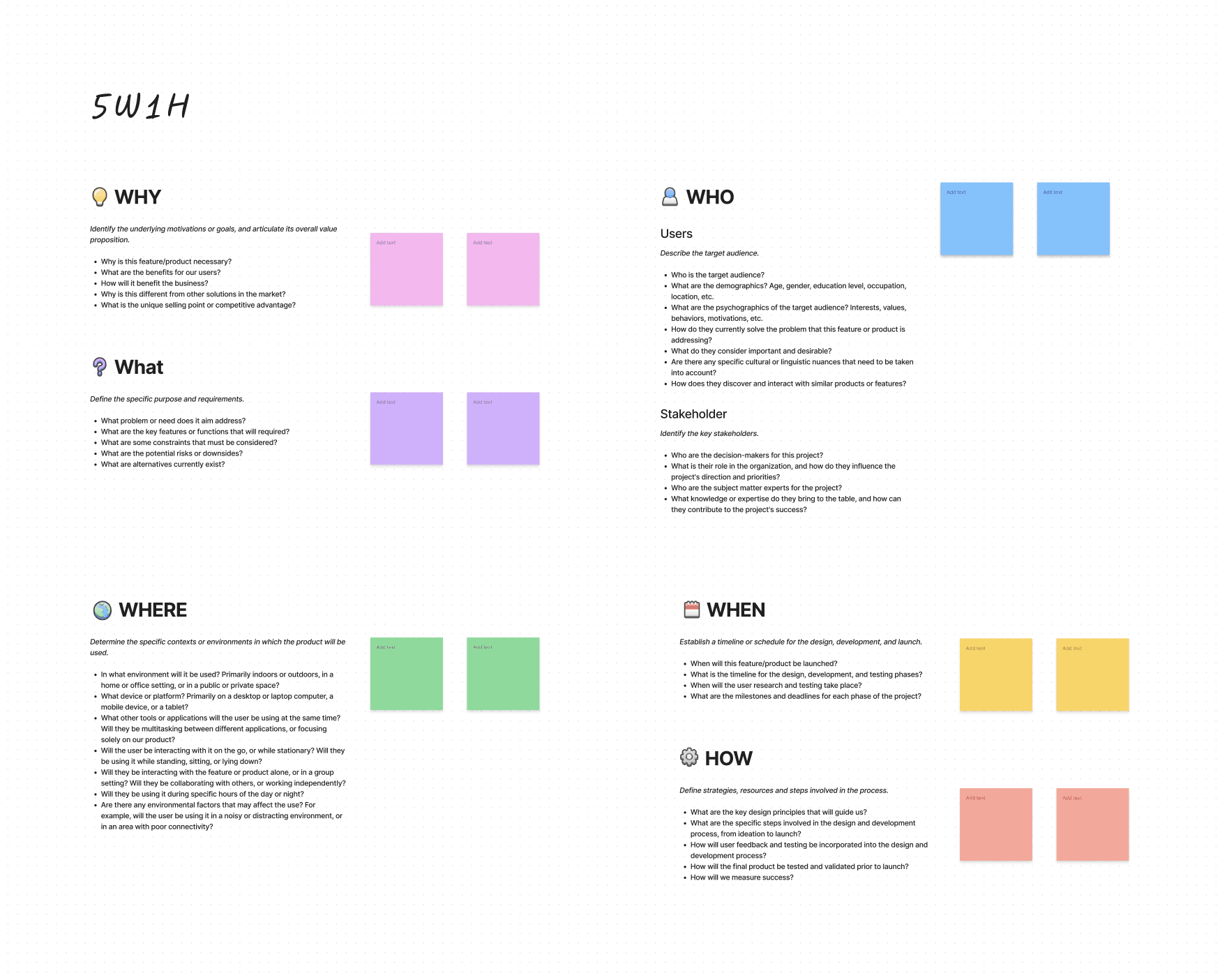
This framework is commonly used in UX and design research to clarify vague problem spaces by breaking them down into six basic questions: Who, What, When, Where, Why, and How.
I chose this framework because it is simple but effective for early-stage filtering. It helped me check whether my initial themes were clear and structured enough before moving into deeper analysis or concept selection.
*DEFINITION
5W1H is a problem-framing framework used to break down vague or complex topics into concrete and analysable components through six guiding questions: Who, What, When, Where, Why, and How.
✍️ I used it to check whether my themes could be clearly explained.
*HOW I USED IT
I applied the six questions to each initial theme and treated them as filters rather than prompts. Each theme had to show clear people, context, reasons, and actions.
✍️ If a theme could not answer several of these questions, I considered it too vague and dismiss it.
*WHY IT WORKED
5W1H helped me move away from abstract or overly personal ideas and focus on themes that could be communicated and developed further.
✍️ This made it easier to remove weak themes and keep the ones with clearer structure.
*ROLE IN THE
(OVERALL) FLOW
The themes that passed this stage later became inputs for more focused frameworks.
✍️ Using 5W1H early helped me prepare for more structured decision-making later on.
*LIMITATION
5W1H does not explain relationships or deeper meanings between themes.
✍️ Because of this, I treated it as a starting point to filter out too abstract theme concepts.
👩💻 After using 5W1H to filter my themes, I used problem framing to decide which themes were worth developing as design problems.
This step helped me step back from personal attachment and focus on themes that could be clearly framed, shared, and explored through design.
Framework source
/Design thinking & UX research
Type of framework
/Problem Framing
Field of use
/Design Research
/UX Strategy
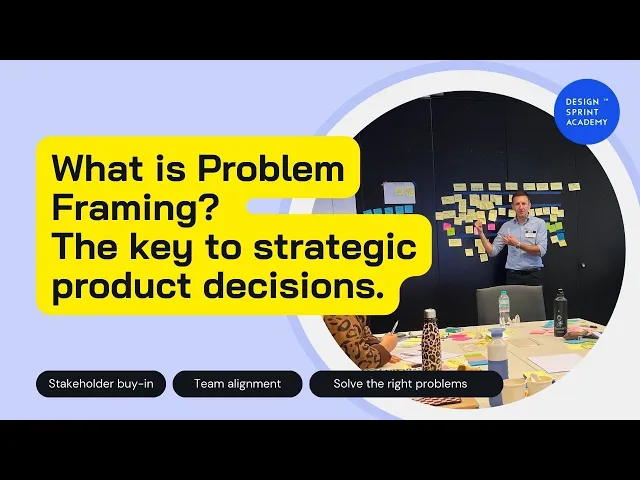
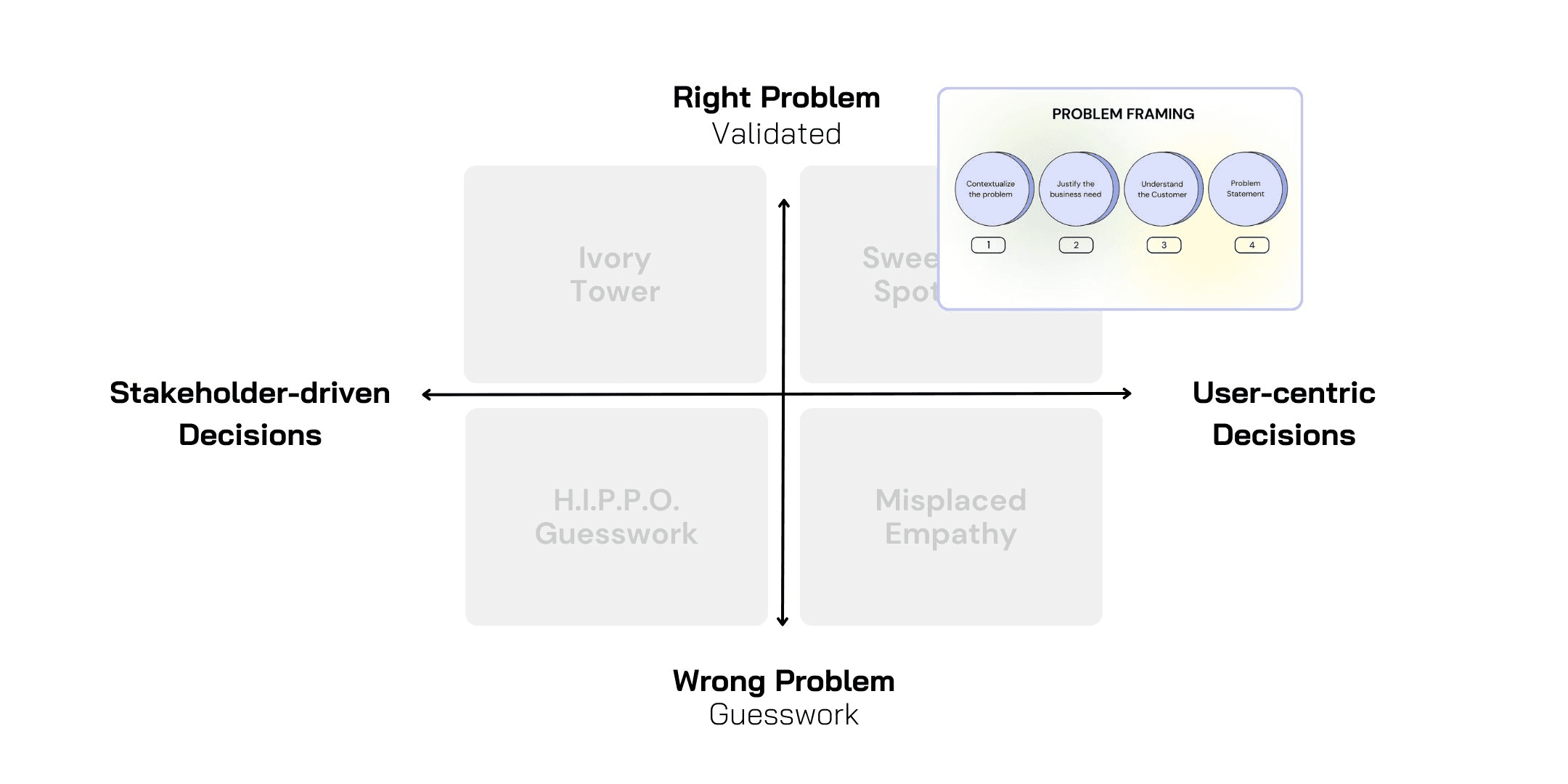
Problem framing focuses on how a situation is defined as a “problem” before any ideas or solutions are generated.
I used this framework after 5W1H to rethink my themes at a higher level. In this, I focused on whether each theme could function as a meaningful and workable design problem.
*DEFINITION
Problem framing is a design approach that focuses on defining what the problem is before generating any ideas or solutions. It helps decide which aspects of a situation should be brought into focus and which should be left out.
✍️ I used this framework to rethink my themes as design problems.
*HOW I USED IT
After filtering my themes with 5W1H, I reframed each remaining theme by asking how it could be defined, shared, and explored as a design problem. I focused on the angle, scope, and perspective of each theme to avoid feeling personal.
✍️ This helped me see which themes could be framed clearly and which were still too personal or unclear.
*WHY IT WORKED
Problem framing helped me evaluate my themes more objectively. It shifted my focus from what I felt strongly about to what could function as a meaningful and workable design direction.
✍️ This made it easier to remove themes that were hard to translate into design.
*ROLE IN THE
(OVERALL) FLOW
This framework was used after 5W1H and before any selection criteria or decision matrices. It helped narrow my themes further by deciding which ones were worth developing as design problems.
✍️ Using problem framing prepared my themes for more logical selection later on.
*LIMITATION
Problem framing does not provide clear rules for choosing between multiple valid frames.
✍️ Because of this, I planned to use early selection criteria in the next stage.
RESULT & REFLECTION
After filtering ideas through two frameworks and a decision matrix, the project became a design system focused on motivation and language learning.
👩💻 Through 5W1H, it indicated that loss of motivation is the main issue in language learning.
It showed me that motivation matters, but I still needed to go deeper to understand what the actual problem is.
👩💻 After problem framing, I realised that many learner problems actually originate from teachers’ workflows.
Learners lose motivation not only because of personal discipline or emotion, but because teachers are forced to manage lessons, feedback, and progress across fragmented tools, which breaks learning continuity and makes the experience feel disorganised and disconnected.
03
PRACTICES & DEVELOPMENT
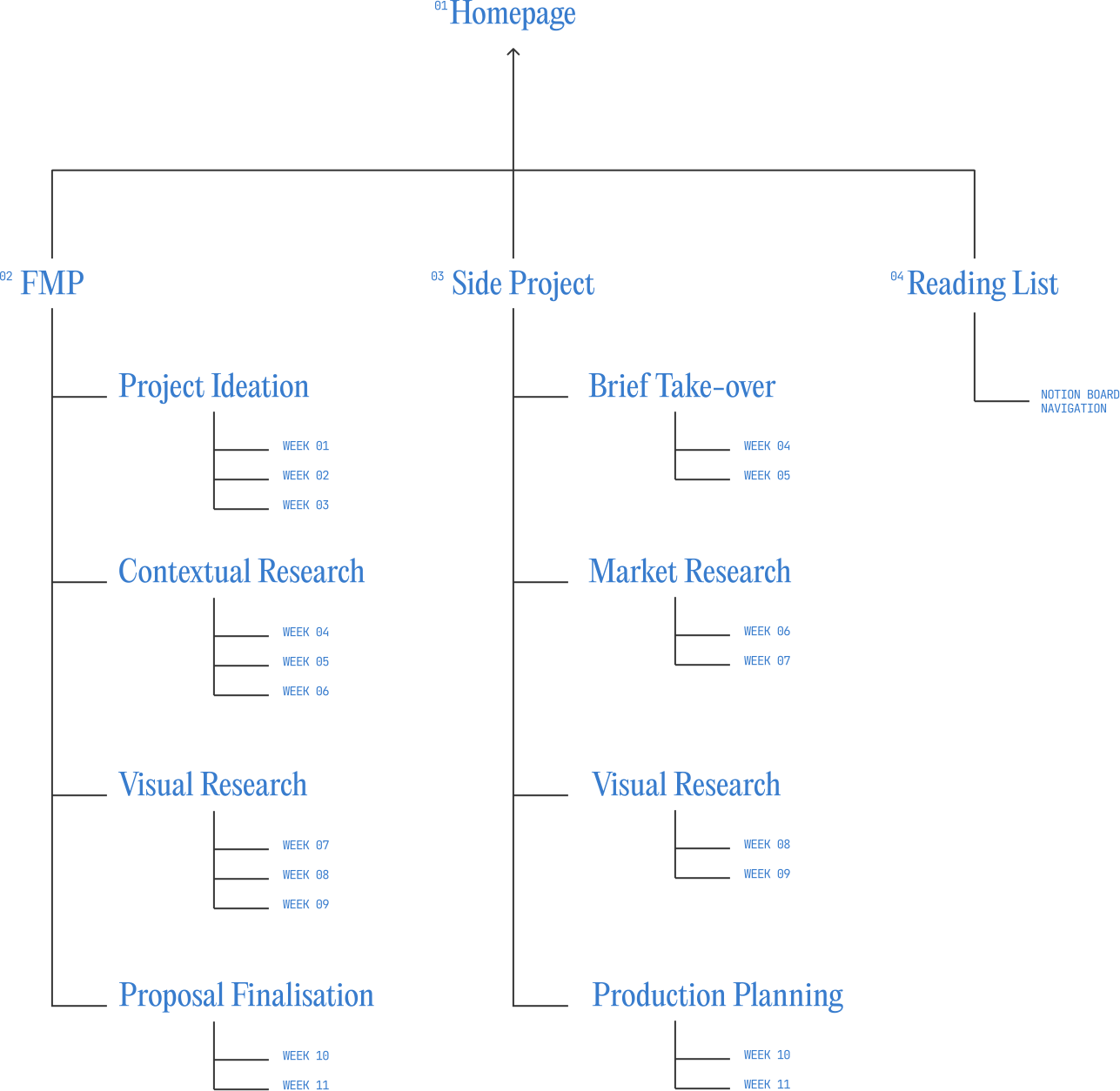
This week, I created the sitemap for my process journal website. The goal was to define the clearest and fastest flow for navigating information, so research, frameworks, and outcomes can be found without friction.
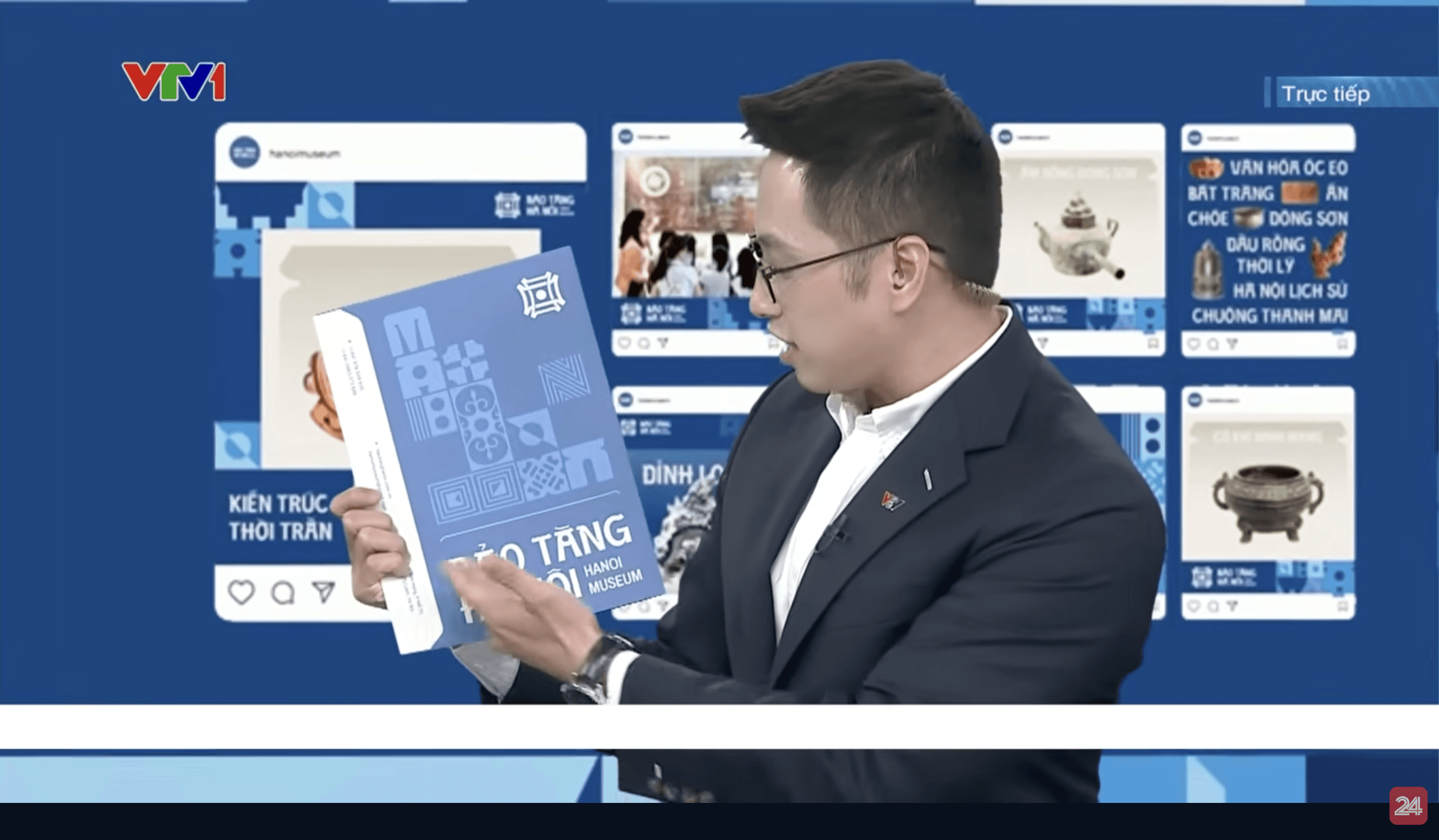
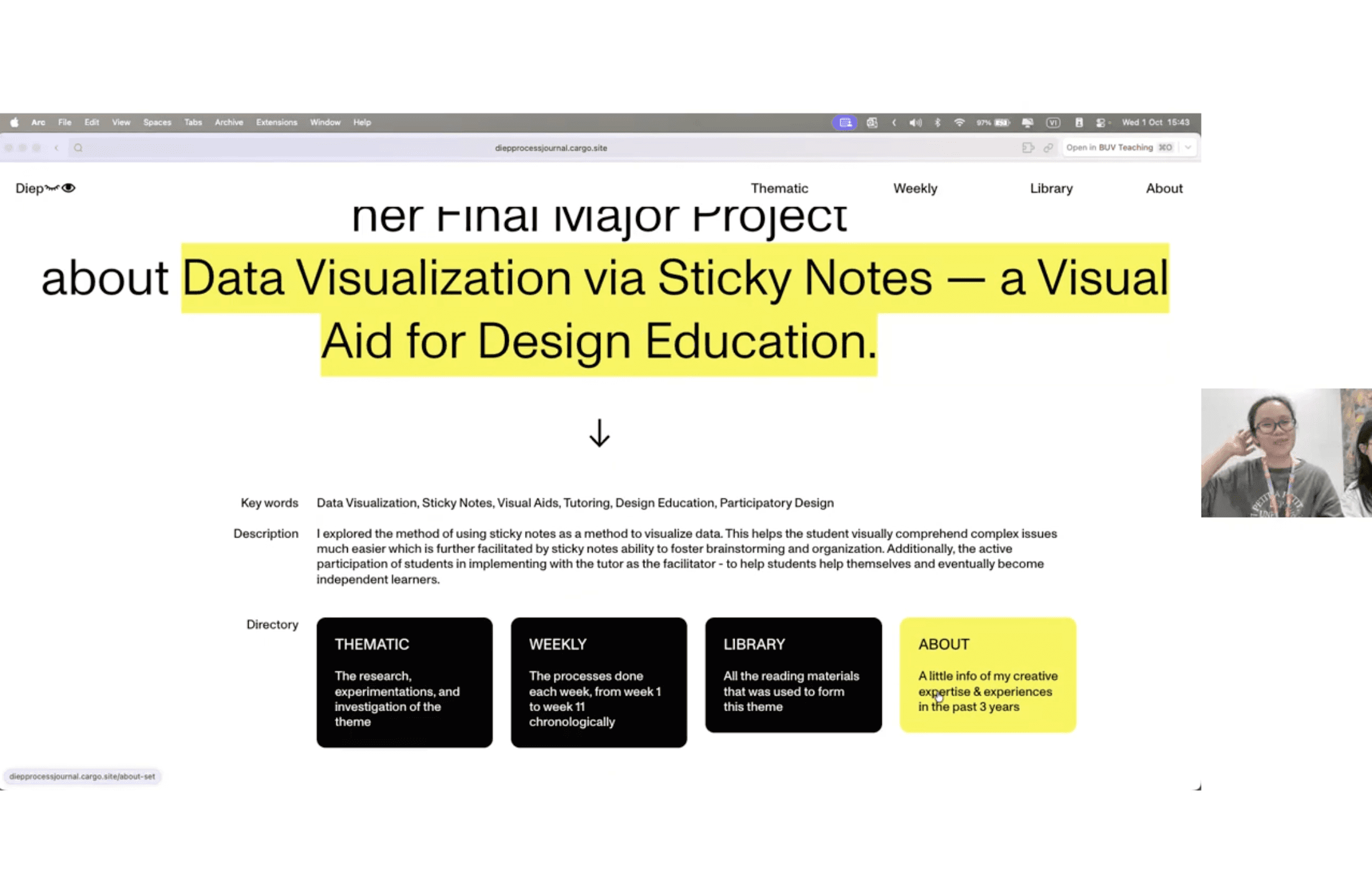
👩💻 I reviewed the structure of existing project websites of previous cohorts.
I want to see how information is organised and presented across different sections.
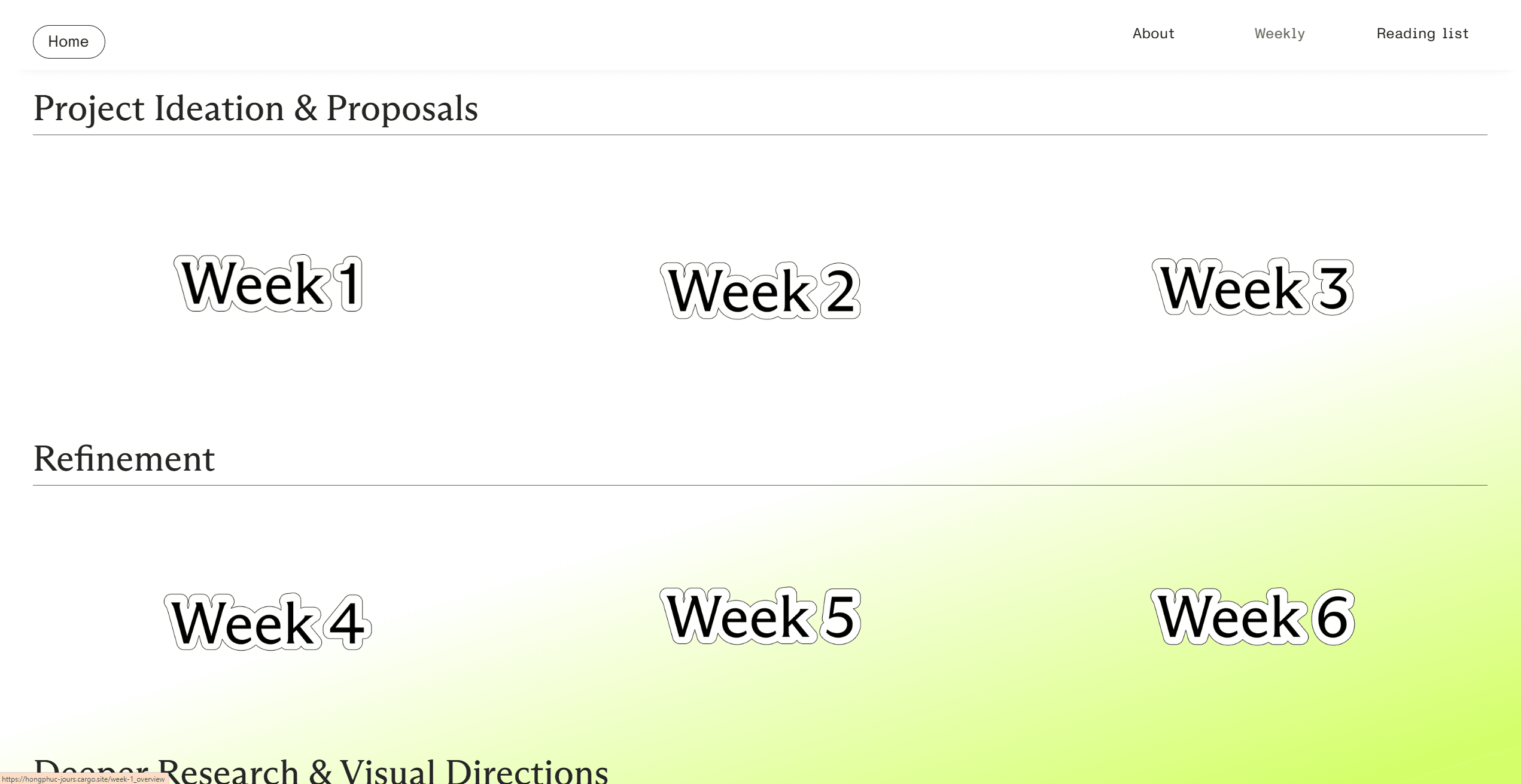
*HONG PHUC 2210CCP
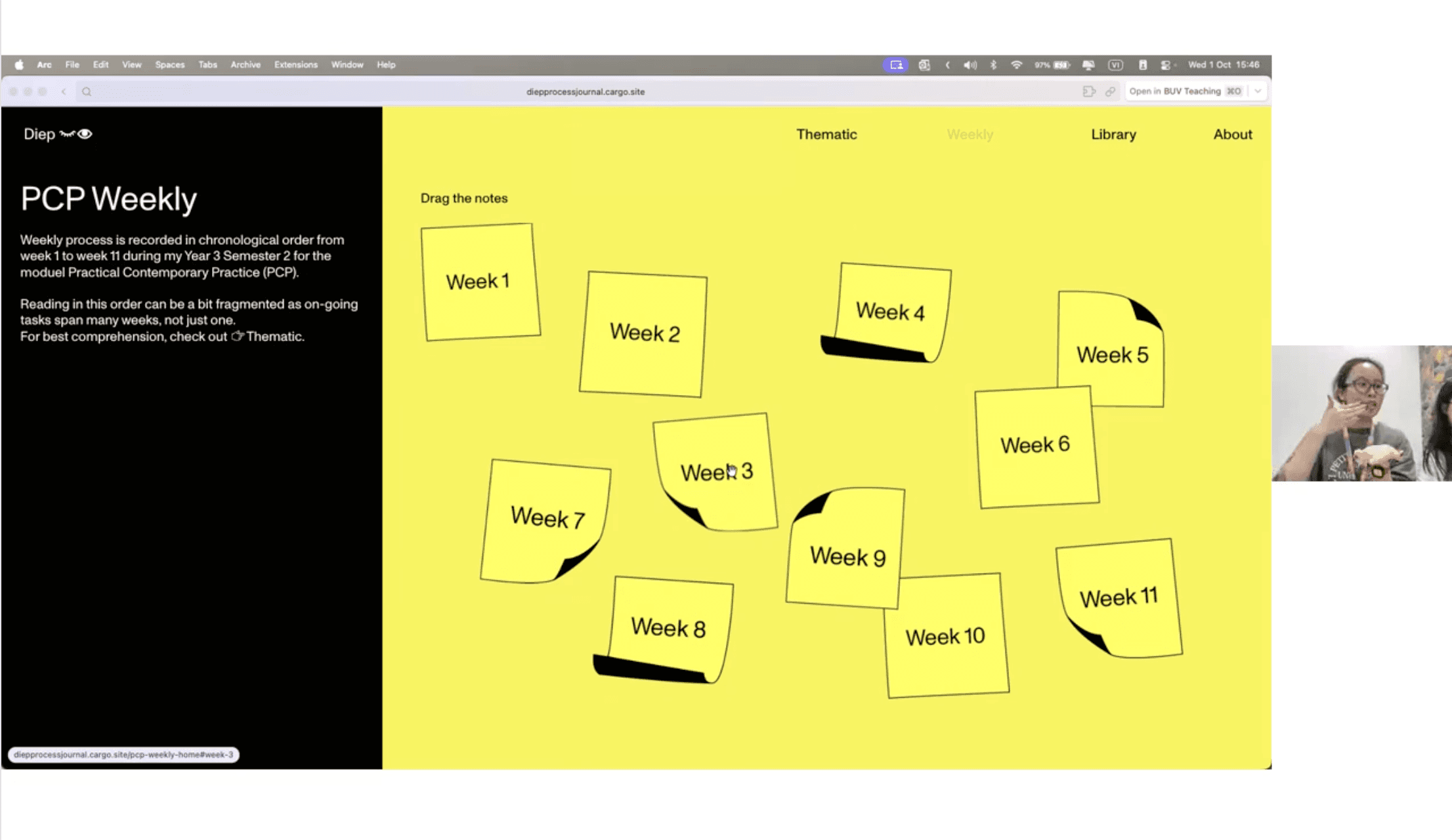
This website organises the project clearly through a weekly structure, which makes progress and workload easy to track.
Combining weekly progression with thematic grouping could better communicate both development phases and underlying research directions in my own process journal.
✍️ My approach could be: hybrid of weekly + thematic structure.
RESULT & REFLECTION
I decided to follow the weekly-first structure because it feels more straightforward for documenting my process as it happens. It allows me to record progress in real time without over-structuring too early. If time allows, I plan to add a thematic view later as an extra layer.